
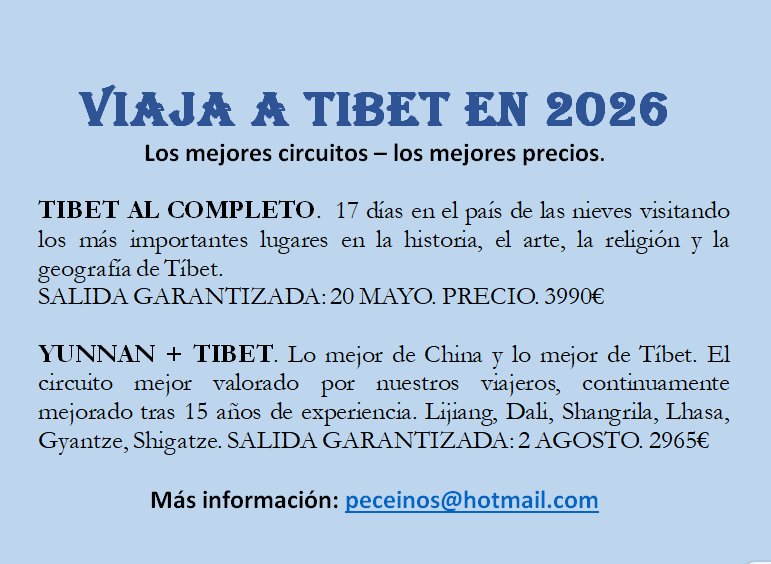
The Dong are one of the minorities of China with a large population. According to the census of the year 2000 their population was 3,000,000 people.
They live mainly in Guizhou Province (approximately 1,800,000 people), along a fringe of flat lands that cross the province from north to south. There is also a big Dong population in the southern part of neighboring Hunan Province (about 900,000), and more than 200,000 persons in Guangxi Zhuang Autonomous Region, and a few thousand in Hubei Province (Enshi Prefecture).
The Dong, as do most of the peoples related to them, live near the rivers or in hills generally not of great height. They mainly cultivate rice. They raise domestic animals, especially hens and pigs. The exploitation of the forests, which holds a special spiritual relationship with the Dong, is an activity of economic importance.
They refer to themselves as «Kam.»
It is generally considered that there are two quite different types of Dong, the Dong of the North and the Dong of the South.
There are important linguistic and cultural differences between them. In general those of the north have received more influences from mainstream Chinese culture, while those of the south better conserve the Dong traditions. The typical monuments of the Dong, such as Drum Towers, Bridges of Rain and Wind, and the Temples of the Goddess Mother Sama, are all characteristic of the Dong of the South.
Their language belongs to the Sino-Tibetan family, Dong Dai branch, Zhuang Dong sub-branch. It has two main dialects, understandably called the northern and southern dialects, whose speakers cannot understand each other easily. Each one of these dialects has in turn three clearly differentiated local sub-dialects.
After 1958 an alphabet was invented for their language, but it has not been widely used. Before 1958, they used Chinese characters adapted to their own language.
More posts on China ethnic groups
El insoportable mundo de ensueño del chófer Champa
Esta es una novela basada en la china contemporánea. Es interesante en primer lugar porque presenta al lector una serie de situaciones rabiosamente actuales, en las que interactúan personajes anclados en la China de este momento. La narración se inicia de forma alegre...
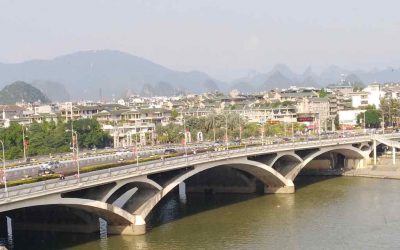
¿Por qué tienes que viajar a Guilin?
¿Por qué tienes que viajar a Guilin? Guilin es una de las ciudades más turísticas y por lo tanto una de las más visitadas. La mayoría de los circuitos internacionales incluyen una parada en Guilin, por lo menos el tiempo para realizar el famosos crucero por el río Li,...
La serpiente en el Horoscopo chino
La serpiente en el horóscopo chino La serpiente es un animal ambiguo en la imagen colectiva del pueblo chino. Por una parte se la considera semejante al dragón. Muchos autores chinos reconocen que el dragón, inexistente, no es más que la sublimación de una serpiente....

Crees en el Horoscopo chino. Aquí tienes sus claves
¿Creemos en los Horoscopos? ¿Está nuestra vida regida por los astros? ¿La fecha de nuestro nacimiento puede determinar el desarrollo de nuestro caracter y personalidad? Son preguntas que nos realizamos cada vez que echamos un vistazo al horoscopo. Son preguntas que,...

Sí, hay un día que la minoría Yao trata a los bueyes como reyes
Muchos de los pueblos de China celebran una fiesta durante la primavera, el día octavo del cuarto mes, en honor a esos bueyes tan necesarios para la actividad agrícola, y los Yao también lo hacen. Ellos tienen una leyenda para explicar el origen de esta fiesta: "En...

El lado oscuro de la dinastía Tang
,Muchos de los aficionados a la historia de China han pasado con horror por algunas escenas que, para la mentalidad del siglo XXI nos parecen especialmente cruentas, como son las descripciones de las últimas victorias del emperador Qin Shihuangti acabadas con el...