
The Dong are one of the minorities of China with a large population. According to the census of the year 2000 their population was 3,000,000 people.
They live mainly in Guizhou Province (approximately 1,800,000 people), along a fringe of flat lands that cross the province from north to south. There is also a big Dong population in the southern part of neighboring Hunan Province (about 900,000), and more than 200,000 persons in Guangxi Zhuang Autonomous Region, and a few thousand in Hubei Province (Enshi Prefecture).
The Dong, as do most of the peoples related to them, live near the rivers or in hills generally not of great height. They mainly cultivate rice. They raise domestic animals, especially hens and pigs. The exploitation of the forests, which holds a special spiritual relationship with the Dong, is an activity of economic importance.
They refer to themselves as «Kam.»
It is generally considered that there are two quite different types of Dong, the Dong of the North and the Dong of the South.
There are important linguistic and cultural differences between them. In general those of the north have received more influences from mainstream Chinese culture, while those of the south better conserve the Dong traditions. The typical monuments of the Dong, such as Drum Towers, Bridges of Rain and Wind, and the Temples of the Goddess Mother Sama, are all characteristic of the Dong of the South.
Their language belongs to the Sino-Tibetan family, Dong Dai branch, Zhuang Dong sub-branch. It has two main dialects, understandably called the northern and southern dialects, whose speakers cannot understand each other easily. Each one of these dialects has in turn three clearly differentiated local sub-dialects.
After 1958 an alphabet was invented for their language, but it has not been widely used. Before 1958, they used Chinese characters adapted to their own language.
More posts on China ethnic groups
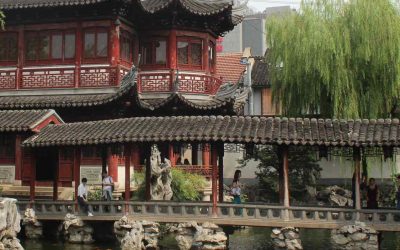
Yu garden in Shanghai: Archetype of Chinese garden
Pedro Ceinos Arcones. Yu garden in Shanghai: Archetype of Chinese garden. Dancing Dragons Books. 2019. (Excerpts from the book) The Yu Garden is Shanghai's main monument and the one that best summarizes the city's history over the past few centuries. A private garden...
El jardín Yu de Shanghai: arquetipo de jardín chino
Pedro Ceinos Arcones. El jardín Yu de Shanghai: arquetipo de jardín chino. Dancing Dragons Books. 2019. (Extractos del libro) El Jardín Yu es el principal monumento de Shanghai y el que mejor resume la historia de la ciudad durante los últimos siglos. Un jardín...
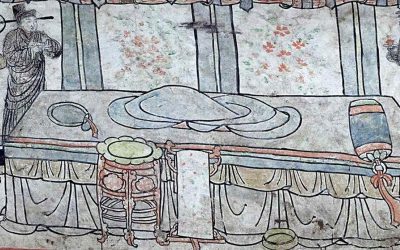
The dog in China’s ancient tombs
Pedro Ceinos Arcones. La Magia del perro en China y el mundo. Dancing Dragons Books. 2019. (Excerpts from the book) The dog in China’s ancient tombs In China, dogs buried with their owners have been discovered in archaeological sites belonging to the most important...
El perro en las tumbas antiguas de China
Pedro Ceinos Arcones. La Magia del perro en China y el mundo. Dancing Dragons Books. 2019. (Extractos del libro) El perro en las tumbas antiguas de China En China se han descubierto perros enterrados con sus dueños en yacimientos arqueológicos pertenecientes a las...
Escuelas filosóficas en tiempos de Buda
Peter Harvey. Buddhism: Teachings, History and Practices. Cambridge University Press. 2013. (Extractos de la p. 11 y ss) En su origen, el budismo fue un movimiento Samana. Los Samanas eran pensadores errantes "renunciantes" que se parecían a los primeros filósofos y...
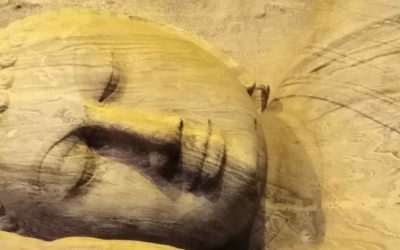
Some philosophical schools in Buddha’s times
Peter Harvey. Buddhism: Teachings, History and Practices. Cambridge University Press. 2013. (Excerpts from the book. Page 11 and ff.) In its origin, Buddhism was a Samana-movement. Samanas were wandering ‘renunciant’ thinkers who were somewhat akin to the early Greek...