
chinese character欠 qiàn – lack, owe
① lack, owe
② short of, lacking.
③ lean forwad
HSK –
STROKES – 4
RADICAL – 欠
Elements —- Pictogram of a person with the mouth open. Phonetic series 欠.
The upper part evolved from the pictogram of an open mouth. A person人with an open mouth is yawning, or trying to compensate for the lack of air.
欠缺 qiànquē – lack/ be deficient of (lack + lack)
哈欠 hāqiàn – yawn (exhale + yawn)
欠债 qiànzhài – owe a debt (owe + debt)
Though in its origin this character, even being related to a person, has a not so clear relation with the character for person 人, now, the evolution of language made it similar. In the upper part of the person a «cubist» representation of an open mouth has been added.
This is a person yawning, or perhaps a person with the mouth open who feels a lack of air. Later it was used for other situations in which there is a lack of something, as to lack something, to be defient in something, to owe money, etc.
More posts on Chinese characters
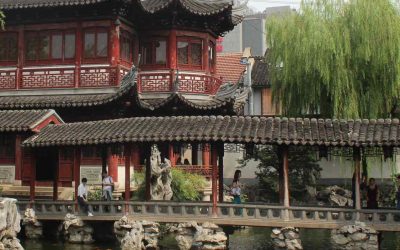
Yu garden in Shanghai: Archetype of Chinese garden
Pedro Ceinos Arcones. Yu garden in Shanghai: Archetype of Chinese garden. Dancing Dragons Books. 2019. (Excerpts from the book) The Yu Garden is Shanghai's main monument and the one that best summarizes the city's history over the past few centuries. A private garden...
El jardín Yu de Shanghai: arquetipo de jardín chino
Pedro Ceinos Arcones. El jardín Yu de Shanghai: arquetipo de jardín chino. Dancing Dragons Books. 2019. (Extractos del libro) El Jardín Yu es el principal monumento de Shanghai y el que mejor resume la historia de la ciudad durante los últimos siglos. Un jardín...
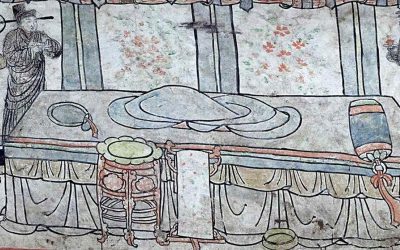
The dog in China’s ancient tombs
Pedro Ceinos Arcones. La Magia del perro en China y el mundo. Dancing Dragons Books. 2019. (Excerpts from the book) The dog in China’s ancient tombs In China, dogs buried with their owners have been discovered in archaeological sites belonging to the most important...
El perro en las tumbas antiguas de China
Pedro Ceinos Arcones. La Magia del perro en China y el mundo. Dancing Dragons Books. 2019. (Extractos del libro) El perro en las tumbas antiguas de China En China se han descubierto perros enterrados con sus dueños en yacimientos arqueológicos pertenecientes a las...
Escuelas filosóficas en tiempos de Buda
Peter Harvey. Buddhism: Teachings, History and Practices. Cambridge University Press. 2013. (Extractos de la p. 11 y ss) En su origen, el budismo fue un movimiento Samana. Los Samanas eran pensadores errantes "renunciantes" que se parecían a los primeros filósofos y...
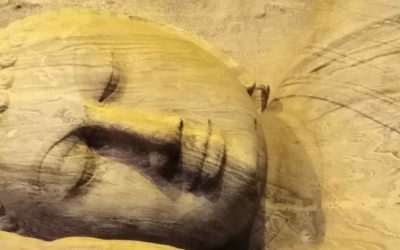
Some philosophical schools in Buddha’s times
Peter Harvey. Buddhism: Teachings, History and Practices. Cambridge University Press. 2013. (Excerpts from the book. Page 11 and ff.) In its origin, Buddhism was a Samana-movement. Samanas were wandering ‘renunciant’ thinkers who were somewhat akin to the early Greek...