
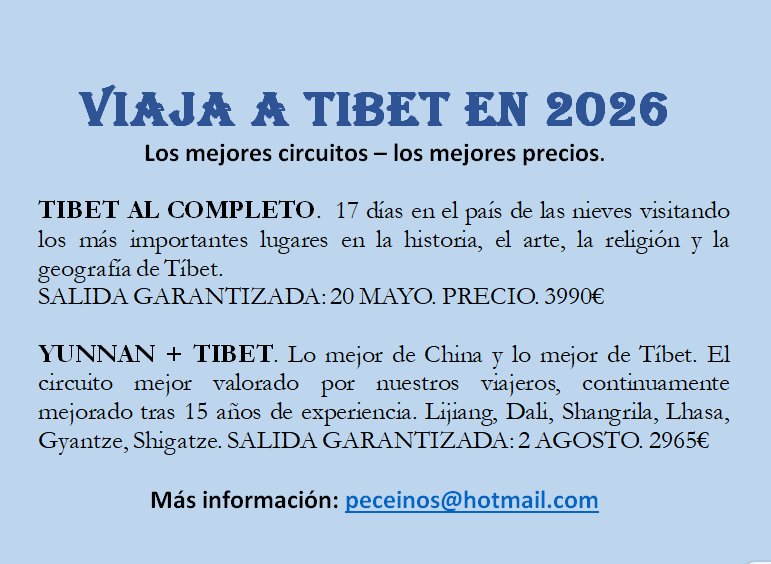
The Dong are one of the minorities of China with a large population. According to the census of the year 2000 their population was 3,000,000 people.
They live mainly in Guizhou Province (approximately 1,800,000 people), along a fringe of flat lands that cross the province from north to south. There is also a big Dong population in the southern part of neighboring Hunan Province (about 900,000), and more than 200,000 persons in Guangxi Zhuang Autonomous Region, and a few thousand in Hubei Province (Enshi Prefecture).
The Dong, as do most of the peoples related to them, live near the rivers or in hills generally not of great height. They mainly cultivate rice. They raise domestic animals, especially hens and pigs. The exploitation of the forests, which holds a special spiritual relationship with the Dong, is an activity of economic importance.
They refer to themselves as «Kam.»
It is generally considered that there are two quite different types of Dong, the Dong of the North and the Dong of the South.
There are important linguistic and cultural differences between them. In general those of the north have received more influences from mainstream Chinese culture, while those of the south better conserve the Dong traditions. The typical monuments of the Dong, such as Drum Towers, Bridges of Rain and Wind, and the Temples of the Goddess Mother Sama, are all characteristic of the Dong of the South.
Their language belongs to the Sino-Tibetan family, Dong Dai branch, Zhuang Dong sub-branch. It has two main dialects, understandably called the northern and southern dialects, whose speakers cannot understand each other easily. Each one of these dialects has in turn three clearly differentiated local sub-dialects.
After 1958 an alphabet was invented for their language, but it has not been widely used. Before 1958, they used Chinese characters adapted to their own language.
More posts on China ethnic groups

Viajar a Guilin
Guilin es la ciudad más bella de China. Así dicen los refranes, y así se ha considerado desde tiempos antiguos. Todos los poetas y pintores han peregrinado a Guilin, plasmando su maravilloso paisaje en lienzos y poemas. Esas colinas de formas caprichosas que se...
Caratteri cinesi 肉 ròu – carne
Caratteri cinesi 肉 ròu – carne carne HSK -2 tratti - 6 RADICALe - 肉 Questo è il pittogramma di un pezzo di carne con vene e nervi. Quando forma altri caratteri, viene semplificato in月: Un corpo con le costole delineate牛肉 niúròu – manzo (bue + carne) 猪肉 zhūròu –...
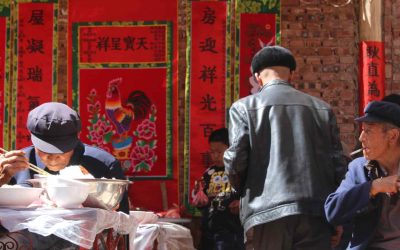
Principales fiestas de la minoría Bai
Feria de Marzo: Se celebra del 15 al 20 de marzo lunar. Es la fiesta más importante de los Bai. Su origen se remonta al Reino de Nanzhao, cuando según la leyenda la diosa Guanyin acabó con un demonio que se comía los ojos de la gente. Se celebra en el Monte Diancang,...
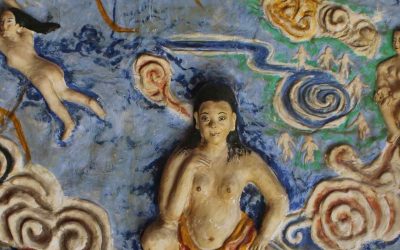
Literatura y proverbios de la minoría Bai
Los Bai tienen una cultura muy elaborada con importantes obras de astronomía y medicina. Según su mito principal: "El origen del hombre y de todas las cosas". En un principio el mundo era un caos oscuro, con un mar enorme entre cielo y tierra cuya agua está en...
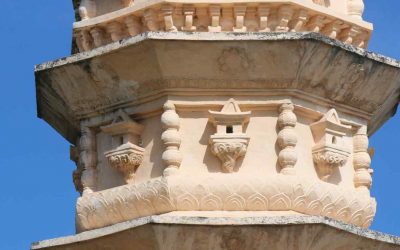
Historia de la minoría Bai
Se sabe poco del origen de los Bai. Hay un buen número de teorías diferentes. Unos dicen que están relacionados con los Yi, y se originaron por tanto mucho más al norte de su posición actual. Otros les consideran aborígenes de la región del Lago Erhai. De lo que no...
Religión de los Bai
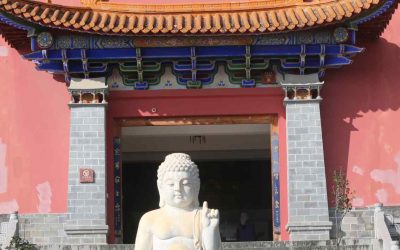
La mayoría de los Bai practican el Budismo desde el siglo VII. De hecho, Guanyin, la diosa budista de la misericordia, juega un papel importante en los mitos más antiguos de los Bai. Además, la influencia china se manifiesta por la importancia que tienen entre ellos...