
The Dong are one of the minorities of China with a large population. According to the census of the year 2000 their population was 3,000,000 people.
They live mainly in Guizhou Province (approximately 1,800,000 people), along a fringe of flat lands that cross the province from north to south. There is also a big Dong population in the southern part of neighboring Hunan Province (about 900,000), and more than 200,000 persons in Guangxi Zhuang Autonomous Region, and a few thousand in Hubei Province (Enshi Prefecture).
The Dong, as do most of the peoples related to them, live near the rivers or in hills generally not of great height. They mainly cultivate rice. They raise domestic animals, especially hens and pigs. The exploitation of the forests, which holds a special spiritual relationship with the Dong, is an activity of economic importance.
They refer to themselves as «Kam.»
It is generally considered that there are two quite different types of Dong, the Dong of the North and the Dong of the South.
There are important linguistic and cultural differences between them. In general those of the north have received more influences from mainstream Chinese culture, while those of the south better conserve the Dong traditions. The typical monuments of the Dong, such as Drum Towers, Bridges of Rain and Wind, and the Temples of the Goddess Mother Sama, are all characteristic of the Dong of the South.
Their language belongs to the Sino-Tibetan family, Dong Dai branch, Zhuang Dong sub-branch. It has two main dialects, understandably called the northern and southern dialects, whose speakers cannot understand each other easily. Each one of these dialects has in turn three clearly differentiated local sub-dialects.
After 1958 an alphabet was invented for their language, but it has not been widely used. Before 1958, they used Chinese characters adapted to their own language.
More posts on China ethnic groups

Zhang Yimou pone de largo las películas de espías en China
Zhang Yimou pone de largo las películas de espías en China En Breve: una película que no debe perderse ningún aficionado al cine o a la cultura china, pero sin grandes ambiciones ideológicas. No obstante la heroicidad de unas personas que se jugaron todo en pos de...
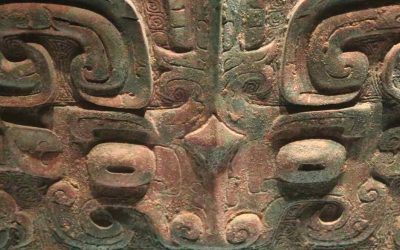
¿Y si la historia de China se hubiera precipitado por la erupción de un volcán en Grecia?
¿Y si la historia de China se hubiera precipitado por la erupción de un volcán en Grecia? Aunque en los tiempos presentes exista mayor preocupación por los fenómenos globales, no es que antes no sucedieran. Algunas catástrofes naturales del pasado fueron tan violentas...

El país de los Gatos – Lao She
El país de los Gatos - Lao She A veces decimos que un poeta o un escritor escribe con su sangre, y muchas son las ocasiones en las que los escritores acaban pagando con su vida por haber escrito un libro. Está posiblemente sea una de ellas, y podemos decir que Lao She...

Descubre el secreto de los cientos de bailes de las minorías de China
Li Beida. Dances of the Chinese minorities. Beijing, China Intercontinental Press, 2006 Aunque los lectores aficionados a los grupos étnicos chinos acogerán con satisfacción la publicación de este nuevo libro sobre las danzas de las minorías, muchos se sentirán...
Libro sobre tres antiguas cítaras chinas
Gulik, Robert Hans van. Sobre tres antiguas cítaras El qin, la cítara china de siete cuerdas, es un instrumento de gran antigüedad y sutileza. Ha sido durante mucho tiempo el instrumento solista por excelencia y el inseparable compañero de los eruditos chinos. Pero no...
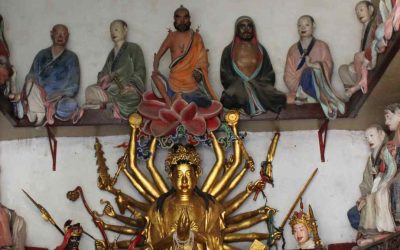
Los 10 dioses más importantes del siglo XX en Sichuan
Los 10 dioses más importantes del siglo XX en Sichuan Y suponemos que no habrá grandes diferencias con los más populares en otras partes de China, excepto en la costa, donde la Emperatriz del Cielo (Tianhuo), patrona de los marineros, estaría en las posiciones de...