

The sacred forests of the Dai: Protecting the ancestors – protecting nature.
Among the indigenous peoples that inhabit the south of China, there are a good number that have near their villages a small grove that they consider sacred. Usually they believe that this forest is the place that the protective spirits of the village inhabit; they maintain taboos in order to impede any activity that can deteriorate it. The Daile who live in the south of Yunnan Province, in Xishuangbanna Prefecture, in spite of being nominally Buddhists for more than 1000 years; still preserve vestiges of their indigenous religion. We see this in several customs, including the respect for these sacred groves. In fact, the Daile people say:
«Buddhism is for the future life, but the cult of the gods of the village is what can help in the present.»
Almost every Dai village has its small sacred forest, where the clan’s ancestors, who are the protective gods of the village, are believed to live. The animals of those forests, the plants, the earth and the water, everything is sacred and cannot be taken away. It is totally forbidden, not only to cut trees, but to take anything, to hunt, to cultivate the earth, and even to gather the fruits of the trees that are left to rot in nature. In fact, during most of the year, except on the two occasions when ceremonies in honor of the ancestors are carried out, people usually don’t even enter these forests. A study carried out by Mr. Gao Lishi (1) has calculated that in only the prefecture of Xishuangbanna, the sacred forests of the Dai people protect a total of 100,000 hectares, comprising approximately five percent of its total area. In his study he has concluded that due to their long interaction with the forces of nature, the Dai understand that without forests, there is no water, and without water they could not cultivate the rice on which they depend to survive, neither could they fish to supplement their diet. The prefecture of Xishuangbanna is unique in China. For it’s semi-tropical climate and abundance of flora and fauna, it enjoys special protection, as demonstrated by the declaration of numerous Nature Reserves and the development of a model of tourism that largely focuses on a respect for nature. Today almost one third of Xishuangbanna is protected forest. Recent studies have evaluated in a scientific way the purpose these sacred forests serve in the conservation of nature. Their conclusions show that they carry out several fundamental purposes: 1. Protection of biodiversity. Since inside these forests the number of vegetal and animal species is far larger than outside. 2. Protection of the soil and atmospheric humidity. 3. Oxygen production. 4. Protection of animals that fight in a natural way against agricultural plagues. As a quiet place which people rarely enter, these forests are a favorite nesting place for different species of birds, that can later play a crucial role in the natural control of plagues. 5. Natural protection against tempests, fires and climatic changes. 6. Protection of the culture and traditions of the Dai. We see once again that indigenous knowledge, so often underestimated by the national majorities, has usually evolved through a long interaction with nature, and the desire to protect it arises from a belief that to protect nature is to protect their own lives. It is interesting to observe how the majorities are now realizing that modern exploitation of the resources of many minority regions cannot be successful if the indigenous traditions of these areas are not borne in mind. This is because the local peoples have long known how to appropriately use and conserve these lands, as pioneers of what is now referred to as sustainable development. (1) Gao Lishi. – Dai zu «longlin» chongbai dui shengdai gongxian huanbao (Contribution of the sacred forests of the Dai to the protection of nature). In «Dai zu wenhua lun» (Discussions about Dai culture) Yunnan Nationalities Press. Kunming. 2000
More posts on China ethnic groups
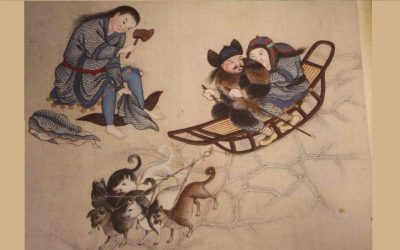
Cuentos del perro fiel: China, Mongolia, Occidente.
En la cultura china tenemos muchos relatos históricos y folklóricos que enaltecían a los perros, situando al amigo animal por encima de los semejantes. Eso era debido a la fidelidad a su amo, una de las virtudes más apreciadas en la sociedad china. En las leyendas,...
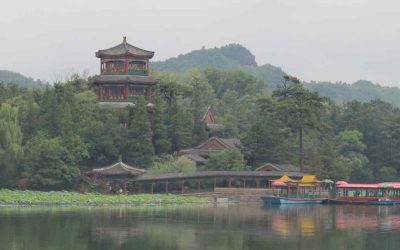
Chengde, un tesoro imperial al norte de Beijing
Chengde es una de las ciudades más interesantes de China. Cuenta con un conjunto monumental único y está rodeada por uno de los más bellos paisajes del norte de China, sin embargo, cada vez es menos visitada. Parece que los viajeros, por muy independientes que viajen,...

Los espectros del suicidio en la China imperial
Básicamente el mundo de los espíritus en China se divide entre los espíritus de la naturaleza, incluyendo a la cabeza de ellos al del cielo y los de otros grandes elementos cósmicos, y los de origen humano, entre los que destacan igualmente los ancestros imperiales,...

Los Bulang, aborígenes de Yunnan
Los Bulang son uno de los pueblos más antiguos del Suroeste de la Provincia de Yunnan. Se les considera unos de los habitantes aborígenes de esta provincia, donde podrían llevar viviendo más de dos mil años. Ellos habitan esa región montañosa que forma la frontera...

Descubre la filosofía oculta tras el carácter Wang 王 rey
Descubre la filosofía oculta tras el carácter Wang 王 rey La autora Julia Ching[1] hace una bonita reflexión sobre el carácter chino para rey, que traducimos no literalmente al español. Palabra para "rey". El carácter chino Wang 王 (rey, gobernante o príncipe) se...
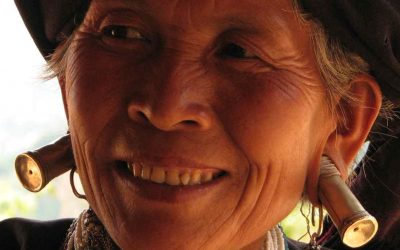
La leyenda de la abuela de la sal
Un mito de la minoría Wa de Yunnan, en China Hace mucho tiempo pasaron por esta zona dos hermanas de la minoría Dai de extraordinaria belleza. Ambas tenían un rostro muy atractivo y maneras agradables por lo que por donde pasaban había hombres que las pedían en...