
The Dong are one of the minorities of China with a large population. According to the census of the year 2000 their population was 3,000,000 people.
They live mainly in Guizhou Province (approximately 1,800,000 people), along a fringe of flat lands that cross the province from north to south. There is also a big Dong population in the southern part of neighboring Hunan Province (about 900,000), and more than 200,000 persons in Guangxi Zhuang Autonomous Region, and a few thousand in Hubei Province (Enshi Prefecture).
The Dong, as do most of the peoples related to them, live near the rivers or in hills generally not of great height. They mainly cultivate rice. They raise domestic animals, especially hens and pigs. The exploitation of the forests, which holds a special spiritual relationship with the Dong, is an activity of economic importance.
They refer to themselves as «Kam.»
It is generally considered that there are two quite different types of Dong, the Dong of the North and the Dong of the South.
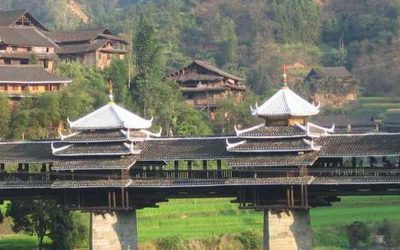
There are important linguistic and cultural differences between them. In general those of the north have received more influences from mainstream Chinese culture, while those of the south better conserve the Dong traditions. The typical monuments of the Dong, such as Drum Towers, Bridges of Rain and Wind, and the Temples of the Goddess Mother Sama, are all characteristic of the Dong of the South.
Their language belongs to the Sino-Tibetan family, Dong Dai branch, Zhuang Dong sub-branch. It has two main dialects, understandably called the northern and southern dialects, whose speakers cannot understand each other easily. Each one of these dialects has in turn three clearly differentiated local sub-dialects.
After 1958 an alphabet was invented for their language, but it has not been widely used. Before 1958, they used Chinese characters adapted to their own language.
More posts on China ethnic groups
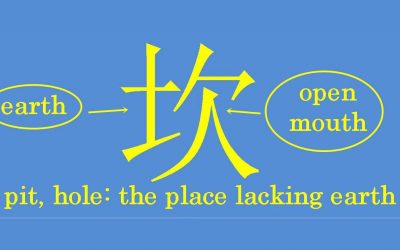
Chinese character 坎 kǎn – pit, hole
Chinese character 吹 chuī – cook 1. pit.2. hole. 3. bank (of a river). 4. ridge HSK - STROKES - RADICAL - 土 Elements ---- An open mouth (lacking) 欠 + earth 土 . Phonetic series 欠. A pictogram of a hole in the earth: the place lacking 欠 earth 土. 垄坎lǒngkǎn ridge...

Caracter chino 坎 kǎn – agujero, trampa
Caracter chino 坎 kǎn – agujero 1. agujero 2. trampa 3. orilla (de un río) HSK - TRAZOS - 7 RADICAL -土 Elementos ---- carecer 欠 + tierra 土. Serie fonética 欠. Pictograma de un agujero en la tierra: donde hay carencia 欠 de tierra 土.垄坎lǒngkǎn cresta entre los...
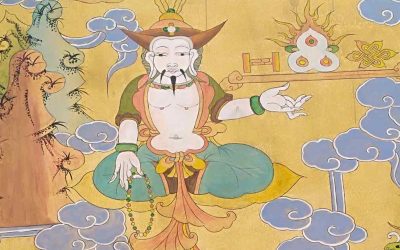
La Creación del Mundo entre los Naxi de Yunnan
La minoría Naxi vive en el Noroeste de Yunnan. Ahora son muy famosos porque la mayoría de los viajes a Yunnan pasan por Lijiang, su hogar ancestral. En los tiempos remotos el cielo y la tierra estaban en una continua agitación, los árboles podían andar, las piedras...

Razones para viajar a Lijiang
Lijiang es posiblemente la ciudad más interesante de Yunnan y de toda China. Capital secular de los Naxi, un pueblo de larga historia y sorprendente cultura, Lijiang es como un oasis entre el mundo chino y el mundo tibetano. Su situación fronteriza entre mundos y...

Cui Xizhen se encuentra con un inmortal
Cui Xizhen[1] se encuentra con un inmortal A principios del período Dalí del emperador Daizong de la dinastía Tang, vivía un hombre llamado Cui Xizhen en el oeste del condado de Zhongling. Era bueno tocando la cítara, tenía habilidad para pintar, y le gustaba cultivar...
Las grandes canciones y otra música de los Dong
En cualquier documento al que nos acerquemos a conocer las culturas de las minorías de China, invariablemente nos encontramos una serie de afirmaciones que parecen comunes a todas ellas; sus creencias en los ancestros y espíritus de la naturaleza en el apartado de...