

The Dong are one of the minorities of China with a large population. According to the census of the year 2000 their population was 3,000,000 people.
They live mainly in Guizhou Province (approximately 1,800,000 people), along a fringe of flat lands that cross the province from north to south. There is also a big Dong population in the southern part of neighboring Hunan Province (about 900,000), and more than 200,000 persons in Guangxi Zhuang Autonomous Region, and a few thousand in Hubei Province (Enshi Prefecture).
The Dong, as do most of the peoples related to them, live near the rivers or in hills generally not of great height. They mainly cultivate rice. They raise domestic animals, especially hens and pigs. The exploitation of the forests, which holds a special spiritual relationship with the Dong, is an activity of economic importance.
They refer to themselves as «Kam.»
It is generally considered that there are two quite different types of Dong, the Dong of the North and the Dong of the South.
There are important linguistic and cultural differences between them. In general those of the north have received more influences from mainstream Chinese culture, while those of the south better conserve the Dong traditions. The typical monuments of the Dong, such as Drum Towers, Bridges of Rain and Wind, and the Temples of the Goddess Mother Sama, are all characteristic of the Dong of the South.
Their language belongs to the Sino-Tibetan family, Dong Dai branch, Zhuang Dong sub-branch. It has two main dialects, understandably called the northern and southern dialects, whose speakers cannot understand each other easily. Each one of these dialects has in turn three clearly differentiated local sub-dialects.
After 1958 an alphabet was invented for their language, but it has not been widely used. Before 1958, they used Chinese characters adapted to their own language.
More posts on China ethnic groups
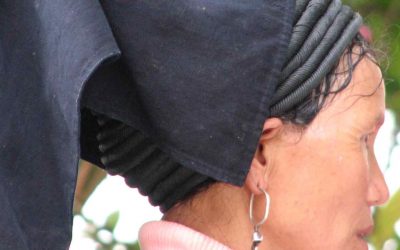
Las Mujeres Azules de China de la minoría Yao
Las Mujeres Azules de China de la minoría Yao Mucha gente ha oído hablar de los Hombres Azules del Sahara (los Tuareg), pero muy poca de las Mujeres Azules de China. Y en realidad entre las mujeres de los llamados Landian Yao o Landen yao fuera de China, la...
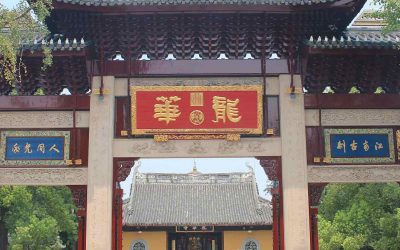
Descubre el simbolismo oculto del templo budista
Los templos budistas siguen el patrón general de la arquitectura china, lo que hace que por su apariencia externa, uno no sabe que ha llegado a un templo hasta que está ante su puerta, aunque a veces la presencia de un muro protector ante ella ya da una pista, y otras...

No es difícil aprender chino, te contamos por qué
¿Es difícil aprender chino? Esta es una de las preguntas que más veces escucho cada vez que visito España, pues hay tantos dichos en nuestra lengua hablada que apuntan a la dificultad del idioma chino, que a pesar de las décadas de globalización aún sigue siendo...
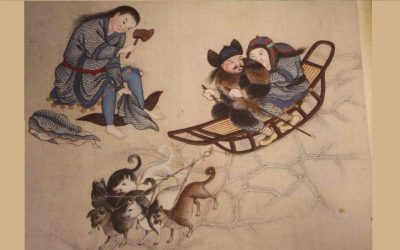
Cuentos del perro fiel: China, Mongolia, Occidente.
En la cultura china tenemos muchos relatos históricos y folklóricos que enaltecían a los perros, situando al amigo animal por encima de los semejantes. Eso era debido a la fidelidad a su amo, una de las virtudes más apreciadas en la sociedad china. En las leyendas,...
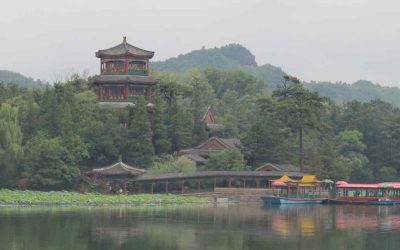
Chengde, un tesoro imperial al norte de Beijing
Chengde es una de las ciudades más interesantes de China. Cuenta con un conjunto monumental único y está rodeada por uno de los más bellos paisajes del norte de China, sin embargo, cada vez es menos visitada. Parece que los viajeros, por muy independientes que viajen,...
Los espectros del suicidio en la China imperial
Básicamente el mundo de los espíritus en China se divide entre los espíritus de la naturaleza, incluyendo a la cabeza de ellos al del cielo y los de otros grandes elementos cósmicos, y los de origen humano, entre los que destacan igualmente los ancestros imperiales,...