
The Dong are one of the minorities of China with a large population. According to the census of the year 2000 their population was 3,000,000 people.
They live mainly in Guizhou Province (approximately 1,800,000 people), along a fringe of flat lands that cross the province from north to south. There is also a big Dong population in the southern part of neighboring Hunan Province (about 900,000), and more than 200,000 persons in Guangxi Zhuang Autonomous Region, and a few thousand in Hubei Province (Enshi Prefecture).
The Dong, as do most of the peoples related to them, live near the rivers or in hills generally not of great height. They mainly cultivate rice. They raise domestic animals, especially hens and pigs. The exploitation of the forests, which holds a special spiritual relationship with the Dong, is an activity of economic importance.
They refer to themselves as «Kam.»
It is generally considered that there are two quite different types of Dong, the Dong of the North and the Dong of the South.
There are important linguistic and cultural differences between them. In general those of the north have received more influences from mainstream Chinese culture, while those of the south better conserve the Dong traditions. The typical monuments of the Dong, such as Drum Towers, Bridges of Rain and Wind, and the Temples of the Goddess Mother Sama, are all characteristic of the Dong of the South.
Their language belongs to the Sino-Tibetan family, Dong Dai branch, Zhuang Dong sub-branch. It has two main dialects, understandably called the northern and southern dialects, whose speakers cannot understand each other easily. Each one of these dialects has in turn three clearly differentiated local sub-dialects.
After 1958 an alphabet was invented for their language, but it has not been widely used. Before 1958, they used Chinese characters adapted to their own language.
More posts on China ethnic groups

Caracter chino 久 jiǔ – largo tiempo.
Caracter chino 久 jiǔ – largo tiempo 1. largo tiempo 2. duradero HSK - 3 TRAZOS - 3 RADICAL -丿 Elementos ---- Pictograma de persona modificada. Serie fonética 久. Pictograma de una persona 人 = ⺈ con algo en su pierna, tal vez una cadena que le obliga a caminar...
Violencia y canibalismo en las Cinco Dinastías
Violencia y canibalismo en las Cinco Dinastías Cuando uno empieza a conocer la historia de China concentra sus lecturas en los momentos culminantes de la misma, en esas grandes dinastías que expandieron el territorio, recrearon sorprendentes formas culturales y se...
Puliendo y frotando para crear el mundo entre los Wa de China
La creación del mundo entre los Wa de China Apenas se hubo terminado de formar el cielo, parecía la espalda de un sapo, llena de bultos y salientes, era muy feo. El dios Li[1] extendió sus manos y estuvo puliendo sin parar. Nadie sabe cuántos años estuvo puliendo,...
A la minoría Jinuo la llaman descendiente del tío.
Los Jinuo, descendientes del tío Los Jinuo, con una población de sólo 21.500 personas (en 2005), son una de las minorías más pequeñas de China y la última en haber sido reconocida oficialmente como tal, ya que fueron designados minoría nacional y se les concedieron...
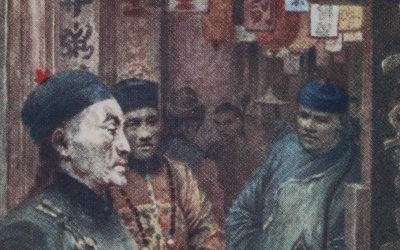
EL ARTE DRAMÁTICO CHINO AL FINAL DE LA ÉPOCA DINÁSTICA
EL ARTE DRAMÁTICO CHINO AL FINAL DE LA ÉPOCA DINÁSTICA Durante un descanso en mis estudios, la tarde de Nochebuena estuve echando un vistazo a un armario en el tengo algunos libros un poco antiguos comprados en diversas ocasiones en mercadillos de Beijing y Shanghai....
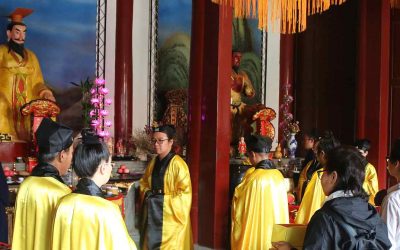
El valor del Taotejing, el libro sagrado de los taoístas
Según Peter Goullart. El Monasterio de la Montaña de Jade. A diferencia de la Biblia y el Corán, el Taotejing no se refiere a los procesos históricos que llevaron a los hombres, o más bien a una tribu particular entre los hombres, a la idea de un solo Dios. Tampoco...