
The Dong are one of the minorities of China with a large population. According to the census of the year 2000 their population was 3,000,000 people.
They live mainly in Guizhou Province (approximately 1,800,000 people), along a fringe of flat lands that cross the province from north to south. There is also a big Dong population in the southern part of neighboring Hunan Province (about 900,000), and more than 200,000 persons in Guangxi Zhuang Autonomous Region, and a few thousand in Hubei Province (Enshi Prefecture).
The Dong, as do most of the peoples related to them, live near the rivers or in hills generally not of great height. They mainly cultivate rice. They raise domestic animals, especially hens and pigs. The exploitation of the forests, which holds a special spiritual relationship with the Dong, is an activity of economic importance.
They refer to themselves as «Kam.»
It is generally considered that there are two quite different types of Dong, the Dong of the North and the Dong of the South.
There are important linguistic and cultural differences between them. In general those of the north have received more influences from mainstream Chinese culture, while those of the south better conserve the Dong traditions. The typical monuments of the Dong, such as Drum Towers, Bridges of Rain and Wind, and the Temples of the Goddess Mother Sama, are all characteristic of the Dong of the South.
Their language belongs to the Sino-Tibetan family, Dong Dai branch, Zhuang Dong sub-branch. It has two main dialects, understandably called the northern and southern dialects, whose speakers cannot understand each other easily. Each one of these dialects has in turn three clearly differentiated local sub-dialects.
After 1958 an alphabet was invented for their language, but it has not been widely used. Before 1958, they used Chinese characters adapted to their own language.
More posts on China ethnic groups

Primavera en una ciudad pequeña: La mejor película de la historia de China
lPrimavera en una ciudad pequeña: La mejor película de la historia de China Todas las clasificaciones realizadas en los últimos años, colocan a una cinta, desconocida para el gran público, como la mejor película de China. Se llama “Primavera en una Pequeña Ciudad” y...
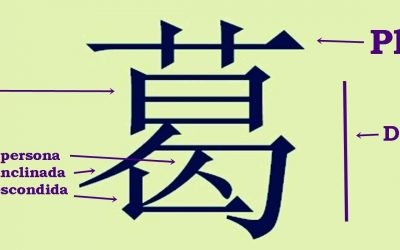
La vid de Kudzu, una planta necesaria
La vid de Kudzu, una planta necesaria. En la pasada edición de mi libro sobre los caracteres chinos expliqué el carácter 葛 de la siguiente forma: gé – vid de kudzu. Una planta 艹 pedida 曷 por sus propiedades beneficiosas y por su uso para hacer ropa. Y a su vez曷 como:...
El carácter y la función de la música en la cultura china
El carácter y la función de la música en la cultura china En 1946 Bliss Wiant terminó su tesis doctoral . El tema era "El carácter y la función de la Música en la cultura china". Algunas de sus reflexiones son tan interesantes que comparto aquí con los lectores...
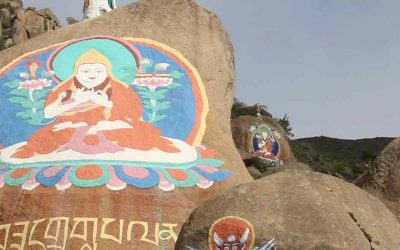
Vida de Milarepa, el eremita poeta
Vida de Milarepa, el eremita poeta. MiIarepa es uno de los más queridos líderes religiosos de Tíbet, su historia, llena de hechos singulares, ha sido contada una y otra vez a lo largo de los siglos, y si os editores no avisaran que se trata de la auto biografía...

La primera descripción de la Religión de los Yi
La primera descripción de la Religión de los Yi Por el padre François Louis Crabouillet en 1872. La religión de los Lolos[1] es la de los hechiceros: apenas consiste en conjuraciones de espíritus malignos, según ellos, los únicos autores del mal. Sin ser devotos como...
El Conejo en el horóscopo chino
El Conejo en el horóscopo chino El conejo es un animal tierno y adorable, en el que destaca su extraordinaria fertilidad, tal vez por eso en el horóscopo chino es el animal más estrechamente relacionado con la luna, el astro femenino por excelencia. Esa fertilidad...