

Viajes a Yunnan, Tibet y oeste de China
chinese character欠 qiàn – lack, owe
① lack, owe
② short of, lacking.
③ lean forwad
HSK –
STROKES – 4
RADICAL – 欠
Elements —- Pictogram of a person with the mouth open. Phonetic series 欠.
The upper part evolved from the pictogram of an open mouth. A person人with an open mouth is yawning, or trying to compensate for the lack of air.
欠缺 qiànquē – lack/ be deficient of (lack + lack)
哈欠 hāqiàn – yawn (exhale + yawn)
欠债 qiànzhài – owe a debt (owe + debt)
Though in its origin this character, even being related to a person, has a not so clear relation with the character for person 人, now, the evolution of language made it similar. In the upper part of the person a «cubist» representation of an open mouth has been added.
This is a person yawning, or perhaps a person with the mouth open who feels a lack of air. Later it was used for other situations in which there is a lack of something, as to lack something, to be defient in something, to owe money, etc.
More posts on Chinese characters
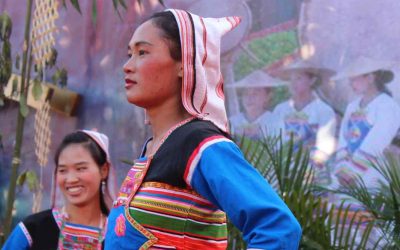
Casarse con una diosa en Yunnan (minoría Jinuo)
Pedro Ceinos Arcones. A La Sombra de la Diosa: Cultura y mitología matriarcal entre los Jinuo del Sur de China. Dancing Dragons Books. 2020. Los principales especialistas religiosos de la minoría Jino el bailabao, el mopei y el zhalai o herrero. Al hombre más viejo...
To marry a goddess in Yunnan (Jinuo nationality)
Pedro Ceinos-Arcones. China's last but one matriarchy: The Jino of Yunnan. 2018 Jinuos’ main religious specialists are bailabao, mopei and zhalai or Blacksmith. The oldest man of the main clan in the village is called zhuoba or mother of the village; the oldest of the...
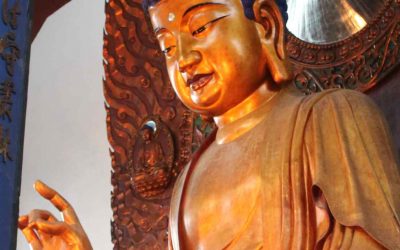
El Buda Sakyamuni como un hombre verdadero: una historia diferente,
En el capítulo cuarto de India in the Chinese Imagination: Myth, Religion, and Thought (editado por John Kieschnick y Meir Shahar, University of Pennsylvania Press, 2014), Nobuyoshi Yamabe presenta un artículo (Indian Myth Transformed in a Chinese Apocryphal Text:...
Buddha as a true man: a different tale
In the fourth chapter of India in the Chinese Imagination: Myth, Religion, and Thought (edited by John Kieschnick and Meir Shahar, University of Pennsylvania Press, 2014), Nobuyoshi Yamabe contributes an article (Indian Myth Transformed in a Chinese Apocryphal Text:...
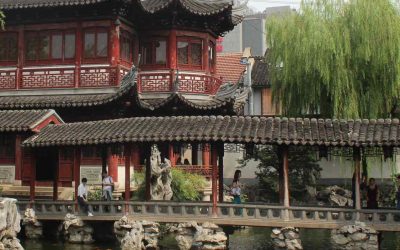
Yu garden in Shanghai: Archetype of Chinese garden
Pedro Ceinos Arcones. Yu garden in Shanghai: Archetype of Chinese garden. Dancing Dragons Books. 2019. (Excerpts from the book) The Yu Garden is Shanghai's main monument and the one that best summarizes the city's history over the past few centuries. A private garden...
El jardín Yu de Shanghai: arquetipo de jardín chino
Pedro Ceinos Arcones. El jardín Yu de Shanghai: arquetipo de jardín chino. Dancing Dragons Books. 2019. (Extractos del libro) El Jardín Yu es el principal monumento de Shanghai y el que mejor resume la historia de la ciudad durante los últimos siglos. Un jardín...