
In the fourth chapter of India in the Chinese Imagination: Myth, Religion, and Thought (edited by John Kieschnick and Meir Shahar, University of Pennsylvania Press, 2014), Nobuyoshi Yamabe contributes an article (Indian Myth Transformed in a Chinese Apocryphal Text: Two Stories on the Buddha’s Hidden Organ) about a rarely touched matter: The sexual organ of Sakyamuni Buddha.
This chapter is a discussion of two fairly peculiar stories found in the “Sūtra on the ocean-like samādhi of the visualization of the Buddha”, which was allegedly translated to Chinese by Buddhabhadra in the fifth century.
In the standard hagiography of Buddhism, the Buddha’s male organ is said to have been concealed and invisible from the outside. This is not the type of topic that receives major attention in Buddhist scriptures. The Ocean Sūtra has a chapter that is exclusively devoted to this topic, including some strange stories, one of which the author translates:
“A large ring of prostitutes came to Śrāvastī from Mathurā and were doing many evils. Three sons of a rich merchant Rulüda frequented their place and wasted their father’s money. Worrying about this, Rulüda went to King Prasenajit and asked him to execute all the prostitutes. However, the King kept Buddhist vows and did not want to kill people. Therefore, the King went to the Buddha and asked him to admonish the prostitutes.
The Buddha informed Sudatta that he would teach the prostitutes at a debate hall (shichang) in seven days. When the day came, the King beat a golden drum and made all debaters in the country come to the debate hall. All members of the sangha and the prostitutes were also summoned.”
“Then each of the great disciples of the Buddha created his own vehicle, such as a cave, nāgas, and a jewel tree, and, performing miracles in concentration, flew to the debate hall. Finally, the Blessed One led Ānanda and, walking in space, came to the debate hall. The Buddha took a seat and briefly taught about suffering, emptiness, impermanence, and the perfections (pāramitā) to the assembly, but the women did not accept [his teaching].
Among the group of women, a prostitute, Lovable by name, said to the women: “The ascetic Gautama has no desire by nature, and people say that he is impotent. That is why he denounces desire in public. If his bodily parts are complete, he should clearly show us that he has this mark like the Jains did. [If he does so], we will become his disciples. If he does not have this mark, he denounces impurity in vain. This person without an organ has no desire by nature; why would he not preach that desire is impure?”
[The prostitute] having thus spoken, the Tathāgata magically created an elephant. A white lotus emerged between the legs of the elephant and touched the ground. Having seen this, the women burst into laughter. They said to one another: “The ascetic is good at conjuration.” The Buddha also magically created an image of a horse king, who extended his retracted organ. It hung like a beryl cylinder and reached his knees. Having seen it, the women said even more that it was conjuration. After that, the Buddha dismissed the entire audience and confronted the prostitutes by himself. The women laughed loudly and said: “Ascetic, do you have the bodily part or not?” The Buddha said: “I have a complete male body. I am a sound man.”
At that time, the Blessed One opened his undergarment (nivāsana). [The women] saw the Buddha’s body, [which was] entirely flat. Then, [his organ] gradually emerged like that of a horse king. When it first appeared, it was like the bodily organ of an eight-year-old boy, and it gradually grew into the shape of that of an adolescent. Seeing this, all the women rejoiced. Then the hidden organ gradually grew [and became] like a cylindrical banner of lotus flowers. In each layer there were ten billion lotuses; each lotus had ten billion jewel colors; each color had ten billion emanation Buddhas; and each emanation Buddha was served by ten billion bodhisattvas and a boundless assembly.
Then the emanation Buddhas unanimously criticized the faults of the bad desires of the women. Upon hearing this, the prostitutes were overcome by shame and submitted to the Buddha’s teaching. Listening to the Buddha’s sermon, they reached spiritual attainments of various degrees.
More posts on Chinese culture

Razones para viajar a Lijiang
Lijiang es posiblemente la ciudad más interesante de Yunnan y de toda China. Capital secular de los Naxi, un pueblo de larga historia y sorprendente cultura, Lijiang es como un oasis entre el mundo chino y el mundo tibetano. Su situación fronteriza entre mundos y...

Cui Xizhen se encuentra con un inmortal
Cui Xizhen[1] se encuentra con un inmortal A principios del período Dalí del emperador Daizong de la dinastía Tang, vivía un hombre llamado Cui Xizhen en el oeste del condado de Zhongling. Era bueno tocando la cítara, tenía habilidad para pintar, y le gustaba cultivar...
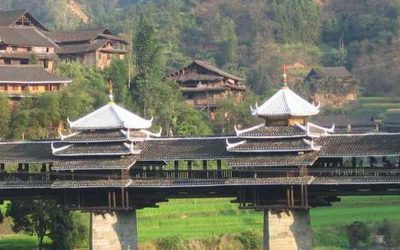
Las grandes canciones y otra música de los Dong
En cualquier documento al que nos acerquemos a conocer las culturas de las minorías de China, invariablemente nos encontramos una serie de afirmaciones que parecen comunes a todas ellas; sus creencias en los ancestros y espíritus de la naturaleza en el apartado de...

Los Reinos de Mujeres de Oriente
En China los reinos de mujeres son mencionados en numerosos documentos históricos, geográficos y folklóricos, descritos a veces con tal abundancia de detalles como para no poder ignorar estas noticias, achacando su creación únicamente a la imaginación humana. No hay...

Como un cambio en la escritura cambió la historia
Como un cambio en la escritura cambió la historia En la antigua China se cortaban las cabezas de otras personas por varias razones diferentes: a los enemigos capturados vivos como parte de un ritual destinado a proporcionar su poder al vencedor, durante la batalla...
Leyenda de la diosa del Sol de los Jingpo
Estaba en el cielo la diosa del Sol cuando un día se dio cuenta de que en la tierra había cambiado mucho la situación de los hombres. Si cuando fueron creados todos eran iguales, y sin maldad, no codiciaban las riquezas, las últimas noticias contaban que cada vez...
More posts on China ethnic groups
Razones para viajar a Lijiang
Lijiang es posiblemente la ciudad más interesante de Yunnan y de toda China. Capital secular de los Naxi, un pueblo de larga historia y sorprendente cultura, Lijiang es como un oasis entre el mundo chino y el mundo tibetano. Su situación fronteriza entre mundos y...
Cui Xizhen se encuentra con un inmortal
Cui Xizhen[1] se encuentra con un inmortal A principios del período Dalí del emperador Daizong de la dinastía Tang, vivía un hombre llamado Cui Xizhen en el oeste del condado de Zhongling. Era bueno tocando la cítara, tenía habilidad para pintar, y le gustaba cultivar...
Las grandes canciones y otra música de los Dong
En cualquier documento al que nos acerquemos a conocer las culturas de las minorías de China, invariablemente nos encontramos una serie de afirmaciones que parecen comunes a todas ellas; sus creencias en los ancestros y espíritus de la naturaleza en el apartado de...
Los Reinos de Mujeres de Oriente
En China los reinos de mujeres son mencionados en numerosos documentos históricos, geográficos y folklóricos, descritos a veces con tal abundancia de detalles como para no poder ignorar estas noticias, achacando su creación únicamente a la imaginación humana. No hay...
Como un cambio en la escritura cambió la historia
Como un cambio en la escritura cambió la historia En la antigua China se cortaban las cabezas de otras personas por varias razones diferentes: a los enemigos capturados vivos como parte de un ritual destinado a proporcionar su poder al vencedor, durante la batalla...
Leyenda de la diosa del Sol de los Jingpo
Estaba en el cielo la diosa del Sol cuando un día se dio cuenta de que en la tierra había cambiado mucho la situación de los hombres. Si cuando fueron creados todos eran iguales, y sin maldad, no codiciaban las riquezas, las últimas noticias contaban que cada vez...