
In the fourth chapter of India in the Chinese Imagination: Myth, Religion, and Thought (edited by John Kieschnick and Meir Shahar, University of Pennsylvania Press, 2014), Nobuyoshi Yamabe contributes an article (Indian Myth Transformed in a Chinese Apocryphal Text: Two Stories on the Buddha’s Hidden Organ) about a rarely touched matter: The sexual organ of Sakyamuni Buddha.
This chapter is a discussion of two fairly peculiar stories found in the “Sūtra on the ocean-like samādhi of the visualization of the Buddha”, which was allegedly translated to Chinese by Buddhabhadra in the fifth century.
In the standard hagiography of Buddhism, the Buddha’s male organ is said to have been concealed and invisible from the outside. This is not the type of topic that receives major attention in Buddhist scriptures. The Ocean Sūtra has a chapter that is exclusively devoted to this topic, including some strange stories, one of which the author translates:
“A large ring of prostitutes came to Śrāvastī from Mathurā and were doing many evils. Three sons of a rich merchant Rulüda frequented their place and wasted their father’s money. Worrying about this, Rulüda went to King Prasenajit and asked him to execute all the prostitutes. However, the King kept Buddhist vows and did not want to kill people. Therefore, the King went to the Buddha and asked him to admonish the prostitutes.
The Buddha informed Sudatta that he would teach the prostitutes at a debate hall (shichang) in seven days. When the day came, the King beat a golden drum and made all debaters in the country come to the debate hall. All members of the sangha and the prostitutes were also summoned.”
“Then each of the great disciples of the Buddha created his own vehicle, such as a cave, nāgas, and a jewel tree, and, performing miracles in concentration, flew to the debate hall. Finally, the Blessed One led Ānanda and, walking in space, came to the debate hall. The Buddha took a seat and briefly taught about suffering, emptiness, impermanence, and the perfections (pāramitā) to the assembly, but the women did not accept [his teaching].
Among the group of women, a prostitute, Lovable by name, said to the women: “The ascetic Gautama has no desire by nature, and people say that he is impotent. That is why he denounces desire in public. If his bodily parts are complete, he should clearly show us that he has this mark like the Jains did. [If he does so], we will become his disciples. If he does not have this mark, he denounces impurity in vain. This person without an organ has no desire by nature; why would he not preach that desire is impure?”
[The prostitute] having thus spoken, the Tathāgata magically created an elephant. A white lotus emerged between the legs of the elephant and touched the ground. Having seen this, the women burst into laughter. They said to one another: “The ascetic is good at conjuration.” The Buddha also magically created an image of a horse king, who extended his retracted organ. It hung like a beryl cylinder and reached his knees. Having seen it, the women said even more that it was conjuration. After that, the Buddha dismissed the entire audience and confronted the prostitutes by himself. The women laughed loudly and said: “Ascetic, do you have the bodily part or not?” The Buddha said: “I have a complete male body. I am a sound man.”
At that time, the Blessed One opened his undergarment (nivāsana). [The women] saw the Buddha’s body, [which was] entirely flat. Then, [his organ] gradually emerged like that of a horse king. When it first appeared, it was like the bodily organ of an eight-year-old boy, and it gradually grew into the shape of that of an adolescent. Seeing this, all the women rejoiced. Then the hidden organ gradually grew [and became] like a cylindrical banner of lotus flowers. In each layer there were ten billion lotuses; each lotus had ten billion jewel colors; each color had ten billion emanation Buddhas; and each emanation Buddha was served by ten billion bodhisattvas and a boundless assembly.
Then the emanation Buddhas unanimously criticized the faults of the bad desires of the women. Upon hearing this, the prostitutes were overcome by shame and submitted to the Buddha’s teaching. Listening to the Buddha’s sermon, they reached spiritual attainments of various degrees.
More posts on Chinese culture
Taosi. La primera capital de China
Taosi. La primera capital de China Taosi es uno de los descubrimientos arqueológicos más importante de China en las últimas décadas. Situado en la parte sur de la provincia de Shanxi, es posiblemente el primer centro urbano surgido en China. La excavación de la...
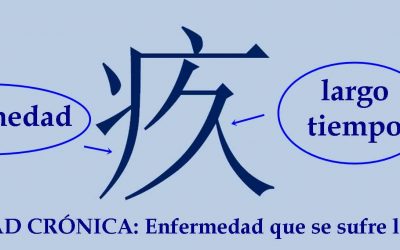
Carácter chino 疚 jiù – enfermedad crónica.
Caracter chino 疚 jiù – enfermedad crónica 1. enfermedad crónica 2. remordimiento HSK - TRAZOS - 8 RADICAL - 疒 Elementos ---- Enfermedad 疒 + largo tiempo 久. Serie fonética 久. Enfermedad 疒 que causa dolor por mucho tiempo 久.内疚 nèijiù remordimiento (interno +...
El mito del diluvio, los chamanes y la religión Sani
El mito del diluvio, los chamanes y la religión Sani (Paul Vial. Los Lolos: Historia, religión, costumbres, lengua, escritura) Seguimos con el capítulo segundo de Los Lolos de Paul Vial, en el que llaman particularmente la atención los fragmentos dedicados al mito del...
Hubo un matriarcado entre los Yugur?
Hubo un matriarcado entre los Yugur? Las costumbres matrimoniales de los Yugur presentan diferencias entre sus dos grupos principales. Entre los Yugur orientales las muchachas disponían de una época de gran libertad sexual. Su rito de paso era la ceremonia de hacerse...
Los Yugur de Gansu, descendientes de los Reyes de Dunhuang
Los Yugur de Gansu, descendientes de los Reyes de Dunhuang Denominación. Su nombre chino es Yugu, escrito 裕 固 族. Los Yugu o Yugur se llaman a sí mismos Yaoyuer y Xilayuguer. La denominación Yugur es relativamente reciente, pues solo empezó a utilizarse después del...

¿Quién es esa Diosa del Cielo que suelta flores?
¿Quién es esa Diosa del Cielo que suelta flores? Cuando llegamos a un país con una cultura tan distinta como la China es como si un manto de niebla nos cubriera los ojos, permitiéndonos solo una visión borrosa de todo lo que nos rodea. Luego vamos reconociendo los...
More posts on China ethnic groups
Taosi. La primera capital de China
Taosi. La primera capital de China Taosi es uno de los descubrimientos arqueológicos más importante de China en las últimas décadas. Situado en la parte sur de la provincia de Shanxi, es posiblemente el primer centro urbano surgido en China. La excavación de la...
Carácter chino 疚 jiù – enfermedad crónica.
Caracter chino 疚 jiù – enfermedad crónica 1. enfermedad crónica 2. remordimiento HSK - TRAZOS - 8 RADICAL - 疒 Elementos ---- Enfermedad 疒 + largo tiempo 久. Serie fonética 久. Enfermedad 疒 que causa dolor por mucho tiempo 久.内疚 nèijiù remordimiento (interno +...
El mito del diluvio, los chamanes y la religión Sani
El mito del diluvio, los chamanes y la religión Sani (Paul Vial. Los Lolos: Historia, religión, costumbres, lengua, escritura) Seguimos con el capítulo segundo de Los Lolos de Paul Vial, en el que llaman particularmente la atención los fragmentos dedicados al mito del...
Hubo un matriarcado entre los Yugur?
Hubo un matriarcado entre los Yugur? Las costumbres matrimoniales de los Yugur presentan diferencias entre sus dos grupos principales. Entre los Yugur orientales las muchachas disponían de una época de gran libertad sexual. Su rito de paso era la ceremonia de hacerse...
Los Yugur de Gansu, descendientes de los Reyes de Dunhuang
Los Yugur de Gansu, descendientes de los Reyes de Dunhuang Denominación. Su nombre chino es Yugu, escrito 裕 固 族. Los Yugu o Yugur se llaman a sí mismos Yaoyuer y Xilayuguer. La denominación Yugur es relativamente reciente, pues solo empezó a utilizarse después del...
¿Quién es esa Diosa del Cielo que suelta flores?
¿Quién es esa Diosa del Cielo que suelta flores? Cuando llegamos a un país con una cultura tan distinta como la China es como si un manto de niebla nos cubriera los ojos, permitiéndonos solo una visión borrosa de todo lo que nos rodea. Luego vamos reconociendo los...