
In the fourth chapter of India in the Chinese Imagination: Myth, Religion, and Thought (edited by John Kieschnick and Meir Shahar, University of Pennsylvania Press, 2014), Nobuyoshi Yamabe contributes an article (Indian Myth Transformed in a Chinese Apocryphal Text: Two Stories on the Buddha’s Hidden Organ) about a rarely touched matter: The sexual organ of Sakyamuni Buddha.
This chapter is a discussion of two fairly peculiar stories found in the “Sūtra on the ocean-like samādhi of the visualization of the Buddha”, which was allegedly translated to Chinese by Buddhabhadra in the fifth century.
In the standard hagiography of Buddhism, the Buddha’s male organ is said to have been concealed and invisible from the outside. This is not the type of topic that receives major attention in Buddhist scriptures. The Ocean Sūtra has a chapter that is exclusively devoted to this topic, including some strange stories, one of which the author translates:
“A large ring of prostitutes came to Śrāvastī from Mathurā and were doing many evils. Three sons of a rich merchant Rulüda frequented their place and wasted their father’s money. Worrying about this, Rulüda went to King Prasenajit and asked him to execute all the prostitutes. However, the King kept Buddhist vows and did not want to kill people. Therefore, the King went to the Buddha and asked him to admonish the prostitutes.
The Buddha informed Sudatta that he would teach the prostitutes at a debate hall (shichang) in seven days. When the day came, the King beat a golden drum and made all debaters in the country come to the debate hall. All members of the sangha and the prostitutes were also summoned.”
“Then each of the great disciples of the Buddha created his own vehicle, such as a cave, nāgas, and a jewel tree, and, performing miracles in concentration, flew to the debate hall. Finally, the Blessed One led Ānanda and, walking in space, came to the debate hall. The Buddha took a seat and briefly taught about suffering, emptiness, impermanence, and the perfections (pāramitā) to the assembly, but the women did not accept [his teaching].
Among the group of women, a prostitute, Lovable by name, said to the women: “The ascetic Gautama has no desire by nature, and people say that he is impotent. That is why he denounces desire in public. If his bodily parts are complete, he should clearly show us that he has this mark like the Jains did. [If he does so], we will become his disciples. If he does not have this mark, he denounces impurity in vain. This person without an organ has no desire by nature; why would he not preach that desire is impure?”
[The prostitute] having thus spoken, the Tathāgata magically created an elephant. A white lotus emerged between the legs of the elephant and touched the ground. Having seen this, the women burst into laughter. They said to one another: “The ascetic is good at conjuration.” The Buddha also magically created an image of a horse king, who extended his retracted organ. It hung like a beryl cylinder and reached his knees. Having seen it, the women said even more that it was conjuration. After that, the Buddha dismissed the entire audience and confronted the prostitutes by himself. The women laughed loudly and said: “Ascetic, do you have the bodily part or not?” The Buddha said: “I have a complete male body. I am a sound man.”
At that time, the Blessed One opened his undergarment (nivāsana). [The women] saw the Buddha’s body, [which was] entirely flat. Then, [his organ] gradually emerged like that of a horse king. When it first appeared, it was like the bodily organ of an eight-year-old boy, and it gradually grew into the shape of that of an adolescent. Seeing this, all the women rejoiced. Then the hidden organ gradually grew [and became] like a cylindrical banner of lotus flowers. In each layer there were ten billion lotuses; each lotus had ten billion jewel colors; each color had ten billion emanation Buddhas; and each emanation Buddha was served by ten billion bodhisattvas and a boundless assembly.
Then the emanation Buddhas unanimously criticized the faults of the bad desires of the women. Upon hearing this, the prostitutes were overcome by shame and submitted to the Buddha’s teaching. Listening to the Buddha’s sermon, they reached spiritual attainments of various degrees.
More posts on Chinese culture
La interpretación de los sueños en China
La interpretación de los sueños en China La semana pasada, en un libro sobre la minoría Hani en la remota región de Jinping uno de los autores dedicaba parte de su artículo sobre la adivinación a la interpretación de los sueños entre los Hani. Lo traduje, añadí...
¿Quieres saber lo que significa soñar con una vaca en China? Te lo contamos aquí
¿Quieres saber lo que significa soñar con una vaca en China? Te lo contamos aquí. En los últimos días me he tropezado con varios documentos que trataban sobe los sueños en China, y algunos con ciertos fragmentos que explicaban en concreto el significado de soñar con...

La Interpretación de los Sueños entre los Hani
La Interpretación de los Sueños entre los Hani Por regla general la interpretación de los sueños en China ha seguido una línea simbólica, atribuyendo a los recuerdos de las experiencias vividas durante el sueño un valor relacionado, a veces no tan claramente en un...
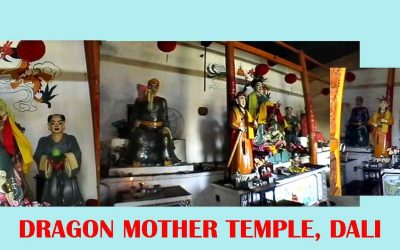
Templo a la Madre del Dragón de los Bai
Templo a la Madre del Dragón de los Bai Todos los que visitan la ciudad antigua de Dali van a ver las famosísimas Tres Pagodas, pues es uno de los monumentos más famosos de la ciudad y de todo Yunnan, pero muy pocos saben que justo en la aldea de al lado. A apenas 100...
Idiomas alternativos entre la minoría Jinuo
Idiomas alternativos entre la minoría Jinuo Al no tener un sistema de escritura, los Jinuo desarrollaron varios sistemas de signos que cubrían la comunicación en diferentes situaciones: desde las puertas de madera en los senderos de montaña que advierten del peligro a...
El extraño perro negro – Relato del Soushenji
El extraño perro negro Relato del Shoushenji Zang Zhongying, natural de Fufeng era un servidor de la corte imperial. El sirviente de su casa hizo arroz y lo puso en una bandeja de madera, pero cayó polvo impuro y lo estropeó. El arroz estaba a punto de ser cocido,...
More posts on China ethnic groups
La interpretación de los sueños en China
La interpretación de los sueños en China La semana pasada, en un libro sobre la minoría Hani en la remota región de Jinping uno de los autores dedicaba parte de su artículo sobre la adivinación a la interpretación de los sueños entre los Hani. Lo traduje, añadí...
¿Quieres saber lo que significa soñar con una vaca en China? Te lo contamos aquí
¿Quieres saber lo que significa soñar con una vaca en China? Te lo contamos aquí. En los últimos días me he tropezado con varios documentos que trataban sobe los sueños en China, y algunos con ciertos fragmentos que explicaban en concreto el significado de soñar con...
La Interpretación de los Sueños entre los Hani
La Interpretación de los Sueños entre los Hani Por regla general la interpretación de los sueños en China ha seguido una línea simbólica, atribuyendo a los recuerdos de las experiencias vividas durante el sueño un valor relacionado, a veces no tan claramente en un...
Templo a la Madre del Dragón de los Bai
Templo a la Madre del Dragón de los Bai Todos los que visitan la ciudad antigua de Dali van a ver las famosísimas Tres Pagodas, pues es uno de los monumentos más famosos de la ciudad y de todo Yunnan, pero muy pocos saben que justo en la aldea de al lado. A apenas 100...
Idiomas alternativos entre la minoría Jinuo
Idiomas alternativos entre la minoría Jinuo Al no tener un sistema de escritura, los Jinuo desarrollaron varios sistemas de signos que cubrían la comunicación en diferentes situaciones: desde las puertas de madera en los senderos de montaña que advierten del peligro a...
El extraño perro negro – Relato del Soushenji
El extraño perro negro Relato del Shoushenji Zang Zhongying, natural de Fufeng era un servidor de la corte imperial. El sirviente de su casa hizo arroz y lo puso en una bandeja de madera, pero cayó polvo impuro y lo estropeó. El arroz estaba a punto de ser cocido,...