
Now is the time to ask him something about Taoism, I decided, and I poured out my questions. He looked up at me with his innocent, childish eyes, his smile gentle but, I thought, slightly ironical.
‘Take time, observe and learn,’ he said simply. ‘Words spoken in haste will not stick; a cup of water splashed into a parched field will do it no good. It is only a slow and gentle rain that will saturate the soil and produce life.’ He became silent ready to resume his work.
His rebuke abashed me. I saw what he meant. He probably thought I was an idle tourist, or worse, a young writer, who wanted to learn something about Taoism in an hour or so, and then write a smart article, boasting of the mysteries revealed to him. Seeing my obvious confusion, the old man relented. His face was all smiles now, but his eyes became thoughtful.
‘If you want to learn about the Eternal Tao, do not be casual and in a hurry. Don’t glean too much from too many books, for each book is full of opinions, prejudices and corruptions.
Read only one book and only one—our Old Master’s Taoteking, and then try to understand it, not by juggling the words and meanings, but intuitively, through your heart and spirit. Don’t ask too many questions, but patiently watch what we Taoists do, and perceive the hidden motives of our actions, and not that which is only for display.
Do not be guided so much by your intellect as by faith, love and your heart, which is another name for understanding and compassion. What you need is wisdom, and not knowledge; for if one has wisdom, knowledge will come naturally. Always remember that the Eternal Tao is Infinite Wisdom, Infinite Love and Infinite Simplicity.’ And with this the old man took up his pickaxe and resumed his hoeing of the bush.
From: Peter Goullart. The monastery of Jade Mountain. 1961
More posts on Chinese culture
Historia de la minoría Bai
Se sabe poco del origen de los Bai. Hay un buen número de teorías diferentes. Unos dicen que están relacionados con los Yi, y se originaron por tanto mucho más al norte de su posición actual. Otros les consideran aborígenes de la región del Lago Erhai. De lo que no...
Religión de los Bai
La mayoría de los Bai practican el Budismo desde el siglo VII. De hecho, Guanyin, la diosa budista de la misericordia, juega un papel importante en los mitos más antiguos de los Bai. Además, la influencia china se manifiesta por la importancia que tienen entre ellos...
Presentando a los Bai
Los Bai son una de las minorías que más largo contacto ha tenido con los chinos. Es también una de las ha recibido más influencias culturales. Esto ha sido debido, en parte, a la accesibilidad de las tierras que habitan, a su condición de agricultores, y por tanto con...
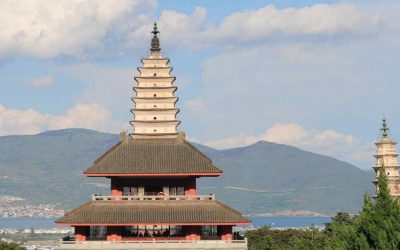
La minoría Bai de Yunnan
Más artículos sobre cultura china
Caratteri cinesi 人 ren – persona
Caratteri cinesi 人 rén – persona persona essere umano HSK -1 tratti - 2 RADICALe - 人 Questo è il pittogramma di una persona in piedi, con le gambe divaricate. È uno dei caratteri usati più spesso. Quando forma altri caratteri, viene semplificato in 亻.人民 rénmín – il...
Caratteri cinesi 认 ren – sapere
Caratteri cinesi 认 ren – sapere sapere riconoscere accettare. HSK -1 tratti - 4 RADICALe - 讠Elements ---- Persona 人 + parola 讠. Phonetic series 人. Le parole 讠 di una persona 人 che riconosce la colpa di qualcuno e accetta la punizione. Riconoscere > sapere.认为 ...
More posts on China ethnic groups
Historia de la minoría Bai
Se sabe poco del origen de los Bai. Hay un buen número de teorías diferentes. Unos dicen que están relacionados con los Yi, y se originaron por tanto mucho más al norte de su posición actual. Otros les consideran aborígenes de la región del Lago Erhai. De lo que no...
Religión de los Bai
La mayoría de los Bai practican el Budismo desde el siglo VII. De hecho, Guanyin, la diosa budista de la misericordia, juega un papel importante en los mitos más antiguos de los Bai. Además, la influencia china se manifiesta por la importancia que tienen entre ellos...
Presentando a los Bai
Los Bai son una de las minorías que más largo contacto ha tenido con los chinos. Es también una de las ha recibido más influencias culturales. Esto ha sido debido, en parte, a la accesibilidad de las tierras que habitan, a su condición de agricultores, y por tanto con...
La minoría Bai de Yunnan
Más artículos sobre cultura china
Caratteri cinesi 人 ren – persona
Caratteri cinesi 人 rén – persona persona essere umano HSK -1 tratti - 2 RADICALe - 人 Questo è il pittogramma di una persona in piedi, con le gambe divaricate. È uno dei caratteri usati più spesso. Quando forma altri caratteri, viene semplificato in 亻.人民 rénmín – il...
Caratteri cinesi 认 ren – sapere
Caratteri cinesi 认 ren – sapere sapere riconoscere accettare. HSK -1 tratti - 4 RADICALe - 讠Elements ---- Persona 人 + parola 讠. Phonetic series 人. Le parole 讠 di una persona 人 che riconosce la colpa di qualcuno e accetta la punizione. Riconoscere > sapere.认为 ...