

Viajes a Yunnan, Tibet y oeste de China
The Dong are one of the minorities of China with a large population. According to the census of the year 2000 their population was 3,000,000 people.
They live mainly in Guizhou Province (approximately 1,800,000 people), along a fringe of flat lands that cross the province from north to south. There is also a big Dong population in the southern part of neighboring Hunan Province (about 900,000), and more than 200,000 persons in Guangxi Zhuang Autonomous Region, and a few thousand in Hubei Province (Enshi Prefecture).
The Dong, as do most of the peoples related to them, live near the rivers or in hills generally not of great height. They mainly cultivate rice. They raise domestic animals, especially hens and pigs. The exploitation of the forests, which holds a special spiritual relationship with the Dong, is an activity of economic importance.
They refer to themselves as «Kam.»
It is generally considered that there are two quite different types of Dong, the Dong of the North and the Dong of the South.
There are important linguistic and cultural differences between them. In general those of the north have received more influences from mainstream Chinese culture, while those of the south better conserve the Dong traditions. The typical monuments of the Dong, such as Drum Towers, Bridges of Rain and Wind, and the Temples of the Goddess Mother Sama, are all characteristic of the Dong of the South.
Their language belongs to the Sino-Tibetan family, Dong Dai branch, Zhuang Dong sub-branch. It has two main dialects, understandably called the northern and southern dialects, whose speakers cannot understand each other easily. Each one of these dialects has in turn three clearly differentiated local sub-dialects.
After 1958 an alphabet was invented for their language, but it has not been widely used. Before 1958, they used Chinese characters adapted to their own language.
More posts on China ethnic groups
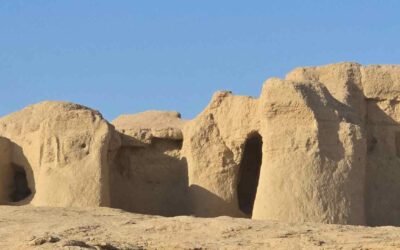
El comercio China Occidente ya florecía antes de la apertura de la Ruta de la Seda
El comercio China Occidente ya florecía antes de la apertura de la Ruta de la Seda. A menudo se atribuye a la apertura de la Ruta de la Seda al reinado del emperador Wudi de la dinastía Han, en el siglo I a. C. En realidad el puso en manos chinas las principales...
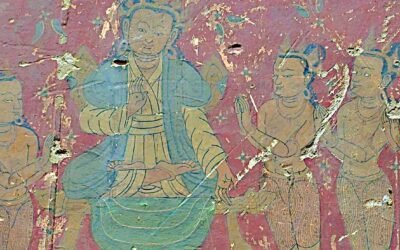
El Monasterio de Shalu y su tesoro de primitivos murales tibetanos
El Monasterio de Shalu y su tesoro de primitivos murales tibetanos. El Monasterio de Shalu es uno de los conjuntos monásticos más importantes del Tíbet por su antigüedad y por sus murales. Situado a unos 20 km de Shigatse, pertenece a la subescuela del mismo nombre...
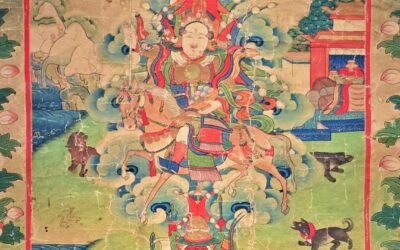
Ancestros caninos en la mitología de la dinastía Liao (Kitán)
Ancestros caninos en la mitología de la dinastía Liao (Kitán) Cómo un texto épico tibetano del siglo XIV preservó el fascinante mito de origen de los feroces guerreros del norte. Descubre el mito de los ancestros caninos de la dinastía Liao (Kitán) según un fascinante...
Un cuento del pícaro de la minoría Wa. Cambiando un huevo de caballo
Cambiando un huevo de caballo El wolang compró un caballo a su hijo, y el pequeño wolang desde ese momento se pasaba el día montado a caballo, recorriendo la aldea de un lado a otro. A todos los aldeanos les parecía muy molesto y el pícaro Yankan pensó que...
Suicidio en China y suicidio en occidente
Introducción - Oriente es Oriente y Occidente Occidente A primeros de noviembre del 2022 mi amiga la psiquiatra Luz González Sánchez me comentó que estaba preparando una ponencia sobre el suicidio. El día 8 de ese mismo mes, en un momento de tranquilidad, hice un...

Viaje-Todo-Tibet 2027
DESCARGA AQUÍ EL PROGRAMA COMPLETO (LOS PRECIOS SON DE 2026) TÍBET COMPLETO 2027 Tras el éxito del año 2026, en 2027 esperamos repetir con este viaje único. Un programa permite conocer todos los lugares famosos en historia, religión y geografía del Tíbet. Todo lo que...