
Pedro Ceinos-Arcones. China’s last but one matriarchy: The Jino of Yunnan. 2018
Jinuos’ main religious specialists are bailabao, mopei and zhalai or Blacksmith. The oldest man of the main clan in the village is called zhuoba or mother of the village; the oldest of the second clan is the zhuosheng or father of the village. They have as leader of the village, important ritual functions, presiding over the most important ceremonies and rituals. The oldest woman in the village, called youka, also has some ritual functions. It is possible that in the past most of the clan leaders were women and maybe shamans: the wisest shamans that could divine omens and chant incantations, as they are credited with the first improvements in human civilization.
They believe the power held nowadays by the religious specialists is a heritage of that of the legendary shamanesses, and, as the spiritual power belongs to women, they must feminize themselves. Sometimes when male shamans conduct rituals, they are required to dress as women, or they need to get married symbolically to a goddess.
While the zhuoba and zhuosheng are ritual leaders, bailapao and mopei are associated with shamans. Both bailapao and mopei were hereditary posts (Cheng 1993). Ironsmiths, priests and shamans, due to their dependence on the goddesses, must ritually marry one. From the moment when the love for the goddess is manifested to the time when the ritual wedding is celebrated there are certain steps.
The start is a casual encounter with the goddess who is looking for a representative on earth; usually a strange thing happens that only can be explained for as divine intervention, such as appearing and disappearing of shellfish, which is considered a sign that the goddess of the shellfish is playing with him. Then they ask an old bailapao to divine if the person that suffered this experience has really been before the goddess. To do it he must perform a ceremony for the goddess of shellfish with offerings of pigs and other animals, and must even sacrifice a cow. Before the sacrifice of a cow a very important ceremony is performed, when the old bailapao, before an improvised altar, produces two shellfish enacting the ritual marriage between the new bailapao and the goddess of the shellfish. If the result is positive they must inform the chief of the village, who would advise him about a ritual marriage, in which he would act as witness. Then they must build a house for the bride goddess in the groom’s home, which a size of 30 cm high. Inside it they put a nuptial bed. Then they chose an auspicious date and celebrate the proper wedding, sacrificing a cow. Under the sound of drums and cymbals, the old shaman helps the groom to go near the goddess, doing some magic tricks to make her presence known to everybody. At the end they invite the goddess to go live in the new house, and from then on they consider that this man has two wives: the goddess and his mortal wife.
After this ceremony the old bailapao would instruct the new one during some time until the moment when he can perform ceremonies by himself. Later he will build his own altar to the shellfish goddess, consisting of a wood panel with many shellfish hanging from it, and he would place his divination objects below the altar, and make his ritual dress black color and a ritual cap of the same color, decorated with strips of many colors and with many shellfish hanging. His ritual implements include two ritual swords, a female one used inside the house, and a male one to be used outside, a pole and a paper fan, that are usually kept on the altar (Cheng 1993).
More posts on China ethnic groups
Literatura china: autores y obras más importantes
La tradición literaria de China no es de las más antiguas del mundo. Es superada en miles de años por las del Cercano Oriente y la de Egipto. Sin embargo se puede afirmar que es la tradición literaria que puede presumir de mayor continuidad a lo largo de la historia....

Caracter chino 久 jiǔ – largo tiempo.
Caracter chino 久 jiǔ – largo tiempo 1. largo tiempo 2. duradero HSK - 3 TRAZOS - 3 RADICAL -丿 Elementos ---- Pictograma de persona modificada. Serie fonética 久. Pictograma de una persona 人 = ⺈ con algo en su pierna, tal vez una cadena que le obliga a caminar...
Violencia y canibalismo en las Cinco Dinastías
Violencia y canibalismo en las Cinco Dinastías Cuando uno empieza a conocer la historia de China concentra sus lecturas en los momentos culminantes de la misma, en esas grandes dinastías que expandieron el territorio, recrearon sorprendentes formas culturales y se...
Puliendo y frotando para crear el mundo entre los Wa de China
La creación del mundo entre los Wa de China Apenas se hubo terminado de formar el cielo, parecía la espalda de un sapo, llena de bultos y salientes, era muy feo. El dios Li[1] extendió sus manos y estuvo puliendo sin parar. Nadie sabe cuántos años estuvo puliendo,...
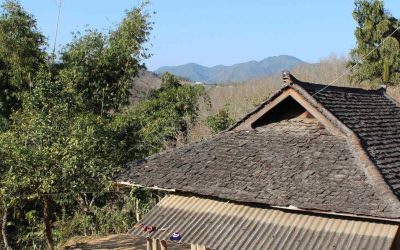
A la minoría Jinuo la llaman descendiente del tío.
Los Jinuo, descendientes del tío Los Jinuo, con una población de sólo 21.500 personas (en 2005), son una de las minorías más pequeñas de China y la última en haber sido reconocida oficialmente como tal, ya que fueron designados minoría nacional y se les concedieron...
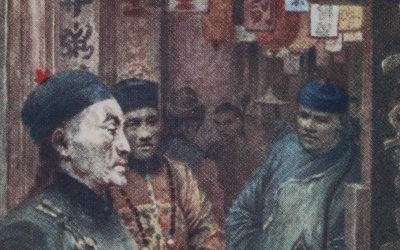
EL ARTE DRAMÁTICO CHINO AL FINAL DE LA ÉPOCA DINÁSTICA
EL ARTE DRAMÁTICO CHINO AL FINAL DE LA ÉPOCA DINÁSTICA Durante un descanso en mis estudios, la tarde de Nochebuena estuve echando un vistazo a un armario en el tengo algunos libros un poco antiguos comprados en diversas ocasiones en mercadillos de Beijing y Shanghai....