
On the left side was a densely wooded rocky hill. Its steep slope was carved into fantastic figures of unicorns, leogryphs and other mythological animals, and statues of gods and saints. They had been fashioned out of rock by the monks more than fifteen centuries ago. Under the hill were grottoes and caves filled with Buddhas and genii, where pilgrims were burning incense. Mantras in Sanskrit and archaic Chinese adorned the rocks, chiselled by the long departed hermits.]
Walking a little farther we came to the spacious entrance hall of a monastery which was unique in China in its grandeur, sanctity.
‘The Monastery of the Spirit’s Retreat’, softly exclaimed Chungan pointing to the three huge golden characters over the wide-open doors of the hall.
‘What a deep and secret meaning these words possess ! ‘ he continued. ‘It is a fitting name for this place, for it is difficult to conceive a better hermitage for the spirit of a man tired of the world and seeking concealment amidst the beautiful and tranquil.
Having emerged from this hall with its golden statue of Maitreya, the Lord Buddha of the Future, we stepped out into a large stone-flagged courtyard bounded by ancient trees. In front of them, on a high stone platform, flanked by two small pagodas and with a massive bronze incense burner in the middle, stood the main temple hall. its great height and immense size dwarfed all other buildings around it. The roof rose in three nobly curved tiers supported by colossal red wooden pillars.
The latticed gates of the hall were open as we came in. A mysterious semi-darkness, heavy with the odour of sandal-wood incense, pervaded the place. Right in the middle of the vast temple sat three golden Buddhas of such unbelievable majesty and of such gigantic proportions that when I saw them I was astonished. The images rested on lotus flowers which, in turn, were supported by stupendous stone pedestals. A colossal lantern, richly carved and decorated, with a perpetually-burning oil-lamp within, was suspended in front of the Trinity.
The central figure was that of the Lord Buddha himself with his royal coiffure and a sign of urna on his forehead. With the eyes turned inwards, gazing not at the world outside before him but at the world within himself; with his enigmatic smile, he sat there a true image of the man that he once was, but who had transcended all human emotions, desires, all suffering and mundane joy; who had found the lost path to Heaven and shown it to suffering mankind, and who at last had entered Nirvana and became himself a God. I gazed enchanted at the mystic statue. I felt mesmerized by the utter stillness of the temple. Clouds of incense floated in spirals towards the lofty ceiling and gently dissolved there in the golden rays of the sun coming through the narrow windows. The very silence was pregnant with the meaning of things unsaid, of prayers uttered and of petitions yet unoffered.
After we had finished our tour of the golden statues of arhats, lining the walls, and paused before an enormous image of the gentle Goddess Kwanyin, which stood against an altar piece representing the Western Paradise, we made our exit by a side door into a commodious guest hall where a young novice brought us cups of the monastery’s own tea. He smiled at Chungan and Tsungpoo, evidently recognizing them as frequent visitors. After a good rest we were ready to proceed to the next famous temple.
Goullart, Peter. Monastery of the Jade Mountain.
Peter Goullart. The monastery of Jade Mountain.
More posts on Chinese culture

The wonderful culture of the Jinuo
Hidden in the tropical mountains of China’s southern border lives one of its most interesting minorities: The Jino nationality. With a population of only 21,000 people they are one of the less known ethnic groups in China, who in the past were often confused with the...
Caratteri cinesi 满 mǎn – pieno
Caratteri cinesi 满 mǎn – pieno pieno soddisfatto molto HSK -3 tratti - 13 RADICALE - 氵 La parte destra deriva da un pittogramma arcaico di due 两 contenitori 鬲 legati saldamente. Acqua 氵 che scorre da due两 contenitori 鬲 collegati, che significa “pieno”.满意 mǎnyì –...
Caratteri cinesi 辆 liàng – auto
Caratteri cinesi 辆 liàng – auto parola per misurare i veicoli auto. HSK -3 tratti - 11 RADICALE - 车 Due 两 carrozze 车. Iniziare a contare le carrozze.三辆车 sānliàngchē - tre auto.Altri post sui caratteri cinesi
Caratteri cinesi 两 liǎng – due
Caratteri cinesi 两 liǎng – due due unità di peso. HSK -2 tratti - 8 RADICALE - Sembra il pittogramma dei finimenti di una carrozza trainata da due cavalli. Ecco due persone 人 in una carrozza coperta 一.两个人 liǎnggèrén due persone.Altri post sui caratteri...
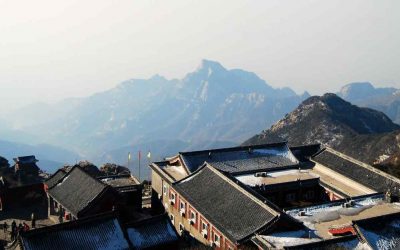
Taishan la montagne sacrée
La montagne Taishan, la vie et la mort dans la culture chinoise, selon l'ouvrage d'Edouard Chavannes Page 3. Les montagnes sont, en Chine, des divinités. Elles sont considérées comme des puissances naturistes qui agissent d’une manière consciente et qui peuvent, par...

Chinese character 次 second, times
Chinese character 次 second, times second times, order inferior remain stand. HSK - 2 STROKES - 6 RADICAL - 冫Elements ---- two 二 + open mouth 欠. Phonetic series 次. This is two 二 breaths (or two sneezes) with an open mouth 欠, emphasizing the second one. Second >...
More posts on China ethnic groups
The wonderful culture of the Jinuo
Hidden in the tropical mountains of China’s southern border lives one of its most interesting minorities: The Jino nationality. With a population of only 21,000 people they are one of the less known ethnic groups in China, who in the past were often confused with the...
Caratteri cinesi 满 mǎn – pieno
Caratteri cinesi 满 mǎn – pieno pieno soddisfatto molto HSK -3 tratti - 13 RADICALE - 氵 La parte destra deriva da un pittogramma arcaico di due 两 contenitori 鬲 legati saldamente. Acqua 氵 che scorre da due两 contenitori 鬲 collegati, che significa “pieno”.满意 mǎnyì –...
Caratteri cinesi 辆 liàng – auto
Caratteri cinesi 辆 liàng – auto parola per misurare i veicoli auto. HSK -3 tratti - 11 RADICALE - 车 Due 两 carrozze 车. Iniziare a contare le carrozze.三辆车 sānliàngchē - tre auto.Altri post sui caratteri cinesi
Caratteri cinesi 两 liǎng – due
Caratteri cinesi 两 liǎng – due due unità di peso. HSK -2 tratti - 8 RADICALE - Sembra il pittogramma dei finimenti di una carrozza trainata da due cavalli. Ecco due persone 人 in una carrozza coperta 一.两个人 liǎnggèrén due persone.Altri post sui caratteri...
Taishan la montagne sacrée
La montagne Taishan, la vie et la mort dans la culture chinoise, selon l'ouvrage d'Edouard Chavannes Page 3. Les montagnes sont, en Chine, des divinités. Elles sont considérées comme des puissances naturistes qui agissent d’une manière consciente et qui peuvent, par...
Chinese character 次 second, times
Chinese character 次 second, times second times, order inferior remain stand. HSK - 2 STROKES - 6 RADICAL - 冫Elements ---- two 二 + open mouth 欠. Phonetic series 次. This is two 二 breaths (or two sneezes) with an open mouth 欠, emphasizing the second one. Second >...