
Taishan Mountain, life and death in Chinese culture, according to the work of Edouard Chavannes
Mountains are, in China, divinities. They are considered as nature powers who act in a conscious way and who can, therefore, be made favourable by sacrifices and touched by prayers; but these deities are of various importance: some are small local geniuses whose authority is exercised only on a small territory; others are majestic sovereigns who hold immense regions under their dependence. The most famous are five (1); they are: the Song Gao or Central Peak, the Taishan or Eastern Peak, the Hengshan or Southern Peak, the Huahan or Western Peak, the Hengshan or Northern Peak. Among these five mountains themselves, there is one that is even more famous than the other four; it is the Taishan or Eastern Peak (pp 3)
Folklore also teaches us that the mountains are the habitat of characters endowed with marvellous faculties; ╓6 fairies or gnomes have their frolics there. In China, under the influence of Taoism, these geniuses of the mountains were conceived as men freed from all the obstacles that weigh down and shelter our existence; they are the immortals, the blessed to whom one who feeds on marvellous jade utensils and who drink ambrosia can go, as the inscriptions on three mirrors from the time of the Han say (pp. 6).
But the mountain is not only the place where the celestial gods and the immortals appear; it is itself a divinity.
The general attributions of a mountain deity are of two kinds: on the one hand, in fact, it weighs by its mass on the whole surrounding territory and is like the principle of stability; it is the regulator which prevents the ground from becoming agitated and the rivers from overflowing; it puts obstacles in the way of earthquakes and floods. On the other hand, the clouds accumulate around the mountain top which seems to produce them and which deserves the Homeric epithet of «assembler of clouds» (pp. 8).
Many prayers from the Ming period show us that the Taishan is indeed invoked by virtue of these two kinds of attributions. In the spring, it is implored to promote the growth of grain; in the autumn, thanksgiving is offered to thank it for the harvest it has protected. It is asked to help men by its invisible and powerful action which distributes rain and good weather in the right proportions and allows the nourishing plants to reach maturity. In case of drought, it is quite natural to turn to it, because «to see that the rain comes to the ploughman in good time is the secret task for which it is responsible»; so when the rains are late, the ears of corn in the fields wither and the peasants begin to fear famine, the sovereign of mankind has recourse to the majestic Peak, who can and must put an end to this misfortune (pp. 8).
Similarly, in the event of an earthquake or flood, prayers appropriate to the circumstances remind the Taishan of his functions as ruler of an entire region and invite it to restore order (pp 9).
Taishan is the Peak of the East; in this capacity it presides over the East, that is to say, the origin of all life. Like the sun, so all existence begins on the eastern side. The yang principle, which makes the sap in the green plants spring forth, is concentrated on the Eastern Peak, from which emanates its invigorating fragrance (pp. 12).
At the same time as the Taishan carries in its side all future existences, it is, by a rather logical consequence, the receptacle where the lives that have come to an end go. From the first two centuries of our era, it was a widespread belief in China that when men died, their souls returned to the Taishan. In popular literature, there are a whole series of anecdotes that inform us about these kinds of Champs Elysées where the dead continue to speak and act as if they were alive; official positions are sought there, recommendations to influential people are very useful; it is another underground China that flourishes under the sacred mountain (pp. 13).
Since the Taishan gives rise to births and collects the dead, it has been concluded that it presides over the greater or lesser duration of human existence; it unites in itself the attributions of the three Fates, giving life, maintaining it and finally interrupting it. Around the year 100 A.D., a certain Hiu Siun, feeling seriously ill, went to the Taishan to ask to live. A poet of the third century A.D. wrote with melancholy: «My life is on its decline; the Eastern Peak has given me an appointment” (pp. 13).
The cult of the Taishan because this divinity presides over the souls of the dead. This is why in China one finds representations of the torments of the underworld in two kinds of Taoist temples, one being those of the god of the city (Chenghuang miao), the others being those of the Taishan (Dongyue miao). This again explains why, in these two kinds of temples, one often sees, suspended above one of the doors or against a wall, some enormous abacus; the presence of this calculating machine means that the divinity of the place has the mission of counting human actions and balancing good and evil (pp 16).
Historical texts tell us at various times and at great length about the famous feng and shan ceremonies that were performed at the top and bottom of the Taishan. The feng sacrifice was for Heaven; the shan sacrifice was for Earth. It is important to determine precisely what these rites were (pp. 16).
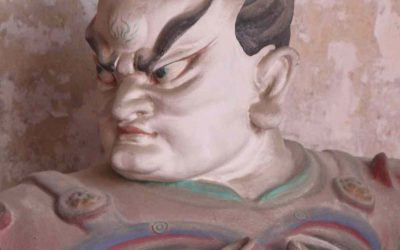
Imagen shi zhao via Flick.
Chavannes, Edouard. Le T’ai Chan. Essai de monographie d’un culte chinoise. Ernest Leroux. Paris. 1910.
More posts on Chinese culture
Caracteres chinos-presentación editorial
Caracteres chinos: un aprendizaje fácil basado en su etimología y evolución PRESENTACIÓN DEL LIBRO POR PARTE DE MIRAGUANO EDICIONES El día 23 de noviembre llega a las librerías un nuevo libro de Pedro Ceinos Arcones (Manual de Escritura de los caracteres chinos, 1998;...

Una mujer, una pistola y una tienda de fideos chinos
Una mujer, una pistola y una tienda de fideos chinos Dirigida por Zhang Yimou: 2009. 85. Min. Una mujer y una pistola y una casa de fideos chinos es una obra bastante singular dentro de la filmografía de Zhang Yimou. Él estilo desenfadado se inicia desde las primeras...
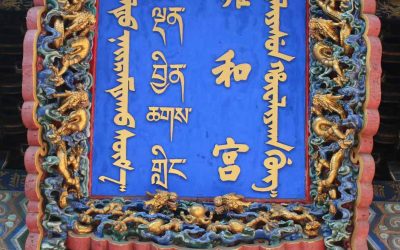
La magia de los caracteres chinos
La magia de los caracteres chinos La palabra escrita, los caracteres chinos, han tenido desde su mismo origen, un sentido mágico para los chinos. No cabe duda de que para ellos un carácter no es sólo un símbolo del concepto que dice representar, sino el propio objeto...
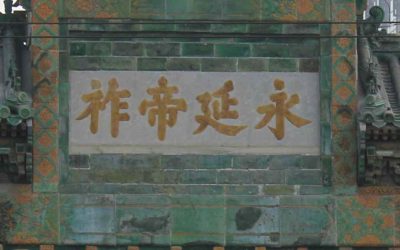
Las frases hechas en chino
Las frases hechas en chino Uno de los aspectos más difíciles de aprender del chino son las llamadas frases hechas o chengyu (成语). En general se refiere a breves frases compuestas por cuatro caracteres que hacen alusión a algún hecho histórico o anécdota literaria de...
La importancia de los tonos
La importancia de los tonos Un fragmento del libro de Mario Satz Tal Orot- Dichos, sueños y pensamientos de Lo Iadúa, el Rabí desconocido. Un enfoque multicultural a algunos de los aspectos más interesantes de la interiorización. 164- “¿Has oído hablar de Shou Lao?”,...

El carácter 拆 chai – desmantelar
El carácter 拆 chai - desmantelar Uno de los caracteres más frecuentes en la escenografía urbana de la china del desarrollo y la transformación es chai 拆- desmantelar. Cualquier paseo por los barrios antiguos de la mayoría de las ciudades chinas llevaba continuamente...
More posts on China ethnic groups
Caracteres chinos-presentación editorial
Caracteres chinos: un aprendizaje fácil basado en su etimología y evolución PRESENTACIÓN DEL LIBRO POR PARTE DE MIRAGUANO EDICIONES El día 23 de noviembre llega a las librerías un nuevo libro de Pedro Ceinos Arcones (Manual de Escritura de los caracteres chinos, 1998;...
Una mujer, una pistola y una tienda de fideos chinos
Una mujer, una pistola y una tienda de fideos chinos Dirigida por Zhang Yimou: 2009. 85. Min. Una mujer y una pistola y una casa de fideos chinos es una obra bastante singular dentro de la filmografía de Zhang Yimou. Él estilo desenfadado se inicia desde las primeras...
La magia de los caracteres chinos
La magia de los caracteres chinos La palabra escrita, los caracteres chinos, han tenido desde su mismo origen, un sentido mágico para los chinos. No cabe duda de que para ellos un carácter no es sólo un símbolo del concepto que dice representar, sino el propio objeto...
Las frases hechas en chino
Las frases hechas en chino Uno de los aspectos más difíciles de aprender del chino son las llamadas frases hechas o chengyu (成语). En general se refiere a breves frases compuestas por cuatro caracteres que hacen alusión a algún hecho histórico o anécdota literaria de...
La importancia de los tonos
La importancia de los tonos Un fragmento del libro de Mario Satz Tal Orot- Dichos, sueños y pensamientos de Lo Iadúa, el Rabí desconocido. Un enfoque multicultural a algunos de los aspectos más interesantes de la interiorización. 164- “¿Has oído hablar de Shou Lao?”,...
El carácter 拆 chai – desmantelar
El carácter 拆 chai - desmantelar Uno de los caracteres más frecuentes en la escenografía urbana de la china del desarrollo y la transformación es chai 拆- desmantelar. Cualquier paseo por los barrios antiguos de la mayoría de las ciudades chinas llevaba continuamente...