
Santasombat, Yos. Lak Chang: A Reconstruction of Tai Identity in Daikong. Canberra, AUS: Pandanus Books, 2001. p 1. (Introduction)
The Tai ethnic group, in its different branches, is beyond any doubt one of the most widespread of any ethnic group in the Southeast Asian peninsula. Different branches of the Tai are found from Assam, Vietnam and Laos to the Chinese province of Guangxi, and from Thailand to the interior of Yunnan. In Yunnan province, southern China, there are at least two major centres of the Tai civilization. One is Sipsongpanna, home of the Tai Lue in southern Yunnan, and another is Daikong, home of the Tai Yai in western Yunnan. While the Tai Lue of Sipsongpanna have been described sketchily by various students of Tai studies, little is known of the Tai Daikong in western Yunnan.
The Tai Daikong are known by various names. They call themselves «Tai Luang» or Tai Yai and in fact share remarkable cultural similarities with the Tai Yai of Shan States and the Tai Yai in Mae Hong Son province of northwest Thailand. According to Chea Yanchong, Tai Daikong refers to a particular group of Tai who settled and continued to live in the areas south (dai) of the River Kong (or Salaween). The Chinese scholars have invariably called this group «Tai Dehong», «Tai Mao», or «Tai Nua»; all these different names connote different state names or places of residence. Professor Chea further distinguished Tai Daikong into two distinct groups. The first group is called Tai Nua (northern Tai). This group of Tai Nua lives near the Burma- Chinese border, in the areas of Muang Mao, Muang Wan Teng or Wan Tieng, Muang One and Chiang Fang. Another group is called «Tai Dai» (southern Tai). The Tai Dai live in the areas of Muang Khon, Muang Ti and Muang La. These two groups of Tai Dehong share many similarities in terms of cultural traits. The spoken languages are basically the same but the written languages are mutually incomprehensible. Tai Dai uses the Tai Pong written characters of the Shan States, while the Tai Nua’s written characters resemble those of the Tai Ahom in Assam.
As if the multitude of tribe and state names (e. g. Tai Daikong, Tai Dehong, Tai Mao, Tai Nua, Tai Luang and Tai Yai) are not bewildering and confusing enough, a number of Western scholars have adopted the Burmese term «Shan» and referred to Tai Mao or Tai Daikong as «Chinese Shan», «Mao Shan», or «Shan of Yunnan». In fact, as Leach has noted, the Burmese apply the term «Shan» consistently to all the inhabitants of the Yunnan- Burma frontiers area who call themselves Tai. The Burmese usage of the term «Shan» has not been confined only to Tai Yai but also included other ethnic Tais such as Tai Lue and Tai Khun who speak different dialects.
The question, then, is who are the Tai Daikong? Postulating from the linguistic arguments, around the eighth century AD, the Tai world already extended across much of northern Southeast Asia, differentiated into five linguistic groups. The western group were ancestors of the present Tai Yai in Burma and Yunnan. By the next century, Tai-speaking chieftaincies were established on the flooded plains of the River Mao. These were believed to be Muang Mao and Pong. In the succeeding centuries, the western group of Tai-speaking people established themselves as the governing population through the Burmese Shan states, Assam and in much of Yunnan.
According to Wyatt, Tai-speaking people can be differentiated into five groups: (1) the northern group, ancestors of Zhuang; (2) Upland Tai group, ancestors of Black, Red and
White Tai; (3) Siang Kwang group, ancestors of central Thai (Siamese); (4) Lao group, ancestors of Lao and Sukhothai languages…
More posts on China ethnic groups

Crees en el Horoscopo chino. Aquí tienes sus claves
¿Creemos en los Horoscopos? ¿Está nuestra vida regida por los astros? ¿La fecha de nuestro nacimiento puede determinar el desarrollo de nuestro caracter y personalidad? Son preguntas que nos realizamos cada vez que echamos un vistazo al horoscopo. Son preguntas que,...

Sí, hay un día que la minoría Yao trata a los bueyes como reyes
Muchos de los pueblos de China celebran una fiesta durante la primavera, el día octavo del cuarto mes, en honor a esos bueyes tan necesarios para la actividad agrícola, y los Yao también lo hacen. Ellos tienen una leyenda para explicar el origen de esta fiesta: "En...

El lado oscuro de la dinastía Tang
,Muchos de los aficionados a la historia de China han pasado con horror por algunas escenas que, para la mentalidad del siglo XXI nos parecen especialmente cruentas, como son las descripciones de las últimas victorias del emperador Qin Shihuangti acabadas con el...
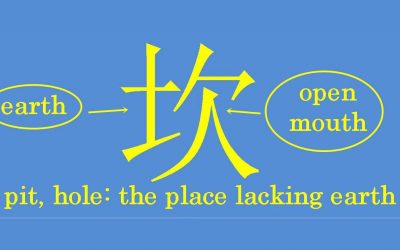
Chinese character 坎 kǎn – pit, hole
Chinese character 吹 chuī – cook 1. pit.2. hole. 3. bank (of a river). 4. ridge HSK - STROKES - RADICAL - 土 Elements ---- An open mouth (lacking) 欠 + earth 土 . Phonetic series 欠. A pictogram of a hole in the earth: the place lacking 欠 earth 土. 垄坎lǒngkǎn ridge...

Caracter chino 坎 kǎn – agujero, trampa
Caracter chino 坎 kǎn – agujero 1. agujero 2. trampa 3. orilla (de un río) HSK - TRAZOS - 7 RADICAL -土 Elementos ---- carecer 欠 + tierra 土. Serie fonética 欠. Pictograma de un agujero en la tierra: donde hay carencia 欠 de tierra 土.垄坎lǒngkǎn cresta entre los...
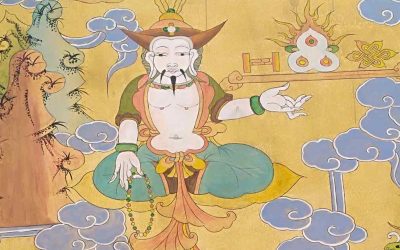
La Creación del Mundo entre los Naxi de Yunnan
La minoría Naxi vive en el Noroeste de Yunnan. Ahora son muy famosos porque la mayoría de los viajes a Yunnan pasan por Lijiang, su hogar ancestral. En los tiempos remotos el cielo y la tierra estaban en una continua agitación, los árboles podían andar, las piedras...