
From Leyendas de la Diosa Madre. Pedro Ceinos Arcones. Miraguano, 2007.
Anyone who approaches the literature of the minorities of Southern China will discover numerous works where the leading role is played by a female goddess or deity. Whether dedicated to the creation of the world (alone or in the company of a male deity), of the human race, or to the instruction of humanity or its ancestors in the basic notions of Neolithic culture (hunting, agriculture, stock breeding), female deities play a central role in the origin and development of humanity.
In recent times numerous works have been published defending the matriarchal character of a great part of the societies formerly established in the territory of Europe and the Near East, characterized by the cult of a goddess in her diverse manifestations: as a creator of the cosmos and of humanity, as an initiator in the secrets of existence and as a renewer of the world in an alternation of life and death that allows the continuity of everything that exists. This is an issue on which there has been no unanimity among the academic community and instead remains at the centre of a bitter debate with obvious political connotations.
Precisely because it is a subject in permanent debate, and because of the consequences it may have for the present life, I have considered it necessary to provide some facts related to the peoples of China.
My interest in the cultures of China’s minorities led me to learn about the existence of societies, such as the Moso, where inheritance is transmitted through the female line and social life is organized around matrilineal families; that of the Jino, who had female leaders until a few generations ago; that of the Yi, also with numerous female leaders; or that of the Lahu with their manifest gender equality. This series of events led me to wonder whether it would be possible to establish a cultural relationship, at least hypothetical, between the matriarchal societies of the ancient West, and those of the present, or of the near past documented in historical sources, of the Far East, in which women played the predominant role.
Going deeper into the culture of the indigenous peoples of China, I found numerous myths, legends, historical descriptions, rituals, and customs that suggest that in the more or less distant past, women occupied an outstanding social position. Among their myths, I was particularly struck by the many stories that highlight the creating or civilizing role of women, as well as those that describe in detail how women lost the dominant role in their societies.
As I discovered new myths that reinforced the role of women in China’s indigenous societies, my desire to find others like them in different social systems grew. As a result of this somewhat obsessive research, I ended up gathering together an interesting treasure trove of narratives that, encompassing the peoples inhabiting in different regions of China, make women the protagonists of history. Thus, what was initially only part of an effort to document the position of women in the societies of minorities, which should also include rituals, customs, and historical descriptions, took on such a volume that I felt it appropriate to translate and present these myths, with enormous interest in themselves, while continuing to investigate the traces of these ancient Chinese matriarchal societies in the minorities cultures of modern China.
By temporarily abandoning my research on Chinese matriarchy and replacing it with the translation of these myths, I realized that the interest in these narratives is multi-faceted: first, because they present the reader with a series of stories, most of which have never been translated into any Western language; second, because they make it possible to know some of the most common motives in the mythologies of the peoples of China (creation of the world, flooding, marriage of brothers, appearance of numerous suns, etc.); third, because they cover geographical regions so far away as to suggest the validity, at least for East Asia, of their subject matter; fourthly, due to their homogeneity in the positive treatment of the female deities which contrasts with other mythical narratives where they play a permanently negative role, and lastly because in a society which still stands on a framework that is tremendously hostile towards women, with tragic results on numerous occasions. Any work aimed at claiming their importance can become a drop in the great tide destined to reverse the present situation.
This work is not extensive, the narrations presented here can hardly be considered a small sample of the vast feminine mythology of the peoples of China. There are many myths that have been left out: either because they are too long, because they are too similar to some of the myths included, or because due to their complex symbolic language they would be difficult to understand for the general reader.
More posts on Chinese culture
Los Baoan, maestros constructores de espadas
Los Baoan, maestros constructores de espadas En las secas tierras de la provincia de Gansu, al pie de la montaña Jishishan, hay tres aldeas habitados por una gente diferente. A primera vista su vida es igual a la de cualquiera otra de las poblaciones musulmanas de...

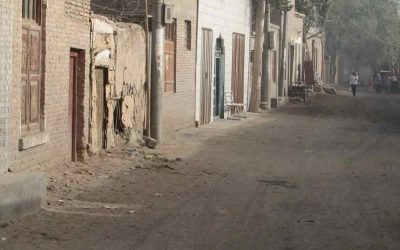
Kashgar, la joya de la Ruta de la Seda
Kashgar, la joya de la Ruta de la Seda Los que preparan un viaje a la Ruta de la Seda china de repente descubren que entre los lugares recomendados, hay uno a considerable distancia de todos los demás. Es la ciudad de Kashgar y todo aquel que realizara un viaje...
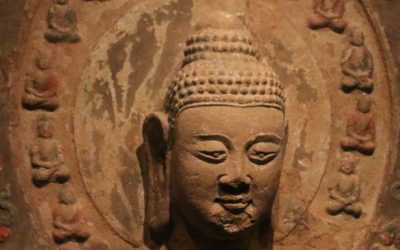
La escultura budista más bella de Beijing
La escultura budista más bella de Beijing Es la “Escultura de piedra del Buda Sakyamuni con dos guardianes”, que se encuentra en el Museo de la Capital de Beijing. Está fechada en la Dinastía Wei del Norte, en el 23º año del Emperador Taihe (año 499 de nuestra era)...
Literatura china: autores y obras más importantes
La tradición literaria de China no es de las más antiguas del mundo. Es superada en miles de años por las del Cercano Oriente y la de Egipto. Sin embargo se puede afirmar que es la tradición literaria que puede presumir de mayor continuidad a lo largo de la historia....

Caracter chino 久 jiǔ – largo tiempo.
Caracter chino 久 jiǔ – largo tiempo 1. largo tiempo 2. duradero HSK - 3 TRAZOS - 3 RADICAL -丿 Elementos ---- Pictograma de persona modificada. Serie fonética 久. Pictograma de una persona 人 = ⺈ con algo en su pierna, tal vez una cadena que le obliga a caminar...
Violencia y canibalismo en las Cinco Dinastías
Violencia y canibalismo en las Cinco Dinastías Cuando uno empieza a conocer la historia de China concentra sus lecturas en los momentos culminantes de la misma, en esas grandes dinastías que expandieron el territorio, recrearon sorprendentes formas culturales y se...
More posts on China ethnic groups
Los Baoan, maestros constructores de espadas
Los Baoan, maestros constructores de espadas En las secas tierras de la provincia de Gansu, al pie de la montaña Jishishan, hay tres aldeas habitados por una gente diferente. A primera vista su vida es igual a la de cualquiera otra de las poblaciones musulmanas de...
Kashgar, la joya de la Ruta de la Seda
Kashgar, la joya de la Ruta de la Seda Los que preparan un viaje a la Ruta de la Seda china de repente descubren que entre los lugares recomendados, hay uno a considerable distancia de todos los demás. Es la ciudad de Kashgar y todo aquel que realizara un viaje...
La escultura budista más bella de Beijing
La escultura budista más bella de Beijing Es la “Escultura de piedra del Buda Sakyamuni con dos guardianes”, que se encuentra en el Museo de la Capital de Beijing. Está fechada en la Dinastía Wei del Norte, en el 23º año del Emperador Taihe (año 499 de nuestra era)...
Literatura china: autores y obras más importantes
La tradición literaria de China no es de las más antiguas del mundo. Es superada en miles de años por las del Cercano Oriente y la de Egipto. Sin embargo se puede afirmar que es la tradición literaria que puede presumir de mayor continuidad a lo largo de la historia....
Caracter chino 久 jiǔ – largo tiempo.
Caracter chino 久 jiǔ – largo tiempo 1. largo tiempo 2. duradero HSK - 3 TRAZOS - 3 RADICAL -丿 Elementos ---- Pictograma de persona modificada. Serie fonética 久. Pictograma de una persona 人 = ⺈ con algo en su pierna, tal vez una cadena que le obliga a caminar...
Violencia y canibalismo en las Cinco Dinastías
Violencia y canibalismo en las Cinco Dinastías Cuando uno empieza a conocer la historia de China concentra sus lecturas en los momentos culminantes de la misma, en esas grandes dinastías que expandieron el territorio, recrearon sorprendentes formas culturales y se...