
The Dong are one of the minorities of China with a large population. According to the census of the year 2000 their population was 3,000,000 people.
They live mainly in Guizhou Province (approximately 1,800,000 people), along a fringe of flat lands that cross the province from north to south. There is also a big Dong population in the southern part of neighboring Hunan Province (about 900,000), and more than 200,000 persons in Guangxi Zhuang Autonomous Region, and a few thousand in Hubei Province (Enshi Prefecture).
The Dong, as do most of the peoples related to them, live near the rivers or in hills generally not of great height. They mainly cultivate rice. They raise domestic animals, especially hens and pigs. The exploitation of the forests, which holds a special spiritual relationship with the Dong, is an activity of economic importance.
They refer to themselves as «Kam.»
It is generally considered that there are two quite different types of Dong, the Dong of the North and the Dong of the South.
There are important linguistic and cultural differences between them. In general those of the north have received more influences from mainstream Chinese culture, while those of the south better conserve the Dong traditions. The typical monuments of the Dong, such as Drum Towers, Bridges of Rain and Wind, and the Temples of the Goddess Mother Sama, are all characteristic of the Dong of the South.
Their language belongs to the Sino-Tibetan family, Dong Dai branch, Zhuang Dong sub-branch. It has two main dialects, understandably called the northern and southern dialects, whose speakers cannot understand each other easily. Each one of these dialects has in turn three clearly differentiated local sub-dialects.
After 1958 an alphabet was invented for their language, but it has not been widely used. Before 1958, they used Chinese characters adapted to their own language.
More posts on China ethnic groups

The wonderful culture of the Jinuo
Hidden in the tropical mountains of China’s southern border lives one of its most interesting minorities: The Jino nationality. With a population of only 21,000 people they are one of the less known ethnic groups in China, who in the past were often confused with the...
Caratteri cinesi 满 mǎn – pieno
Caratteri cinesi 满 mǎn – pieno pieno soddisfatto molto HSK -3 tratti - 13 RADICALE - 氵 La parte destra deriva da un pittogramma arcaico di due 两 contenitori 鬲 legati saldamente. Acqua 氵 che scorre da due两 contenitori 鬲 collegati, che significa “pieno”.满意 mǎnyì –...
Caratteri cinesi 辆 liàng – auto
Caratteri cinesi 辆 liàng – auto parola per misurare i veicoli auto. HSK -3 tratti - 11 RADICALE - 车 Due 两 carrozze 车. Iniziare a contare le carrozze.三辆车 sānliàngchē - tre auto.Altri post sui caratteri cinesi
Caratteri cinesi 两 liǎng – due
Caratteri cinesi 两 liǎng – due due unità di peso. HSK -2 tratti - 8 RADICALE - Sembra il pittogramma dei finimenti di una carrozza trainata da due cavalli. Ecco due persone 人 in una carrozza coperta 一.两个人 liǎnggèrén due persone.Altri post sui caratteri...
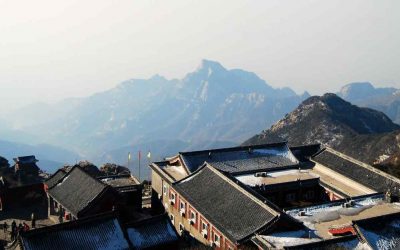
Taishan la montagne sacrée
La montagne Taishan, la vie et la mort dans la culture chinoise, selon l'ouvrage d'Edouard Chavannes Page 3. Les montagnes sont, en Chine, des divinités. Elles sont considérées comme des puissances naturistes qui agissent d’une manière consciente et qui peuvent, par...

Chinese character 次 second, times
Chinese character 次 second, times second times, order inferior remain stand. HSK - 2 STROKES - 6 RADICAL - 冫Elements ---- two 二 + open mouth 欠. Phonetic series 次. This is two 二 breaths (or two sneezes) with an open mouth 欠, emphasizing the second one. Second >...