
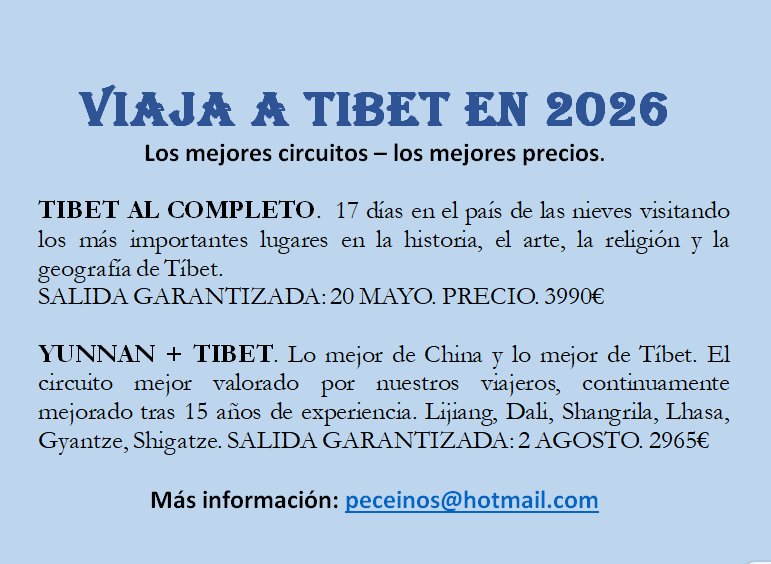
The Dong are one of the minorities of China with a large population. According to the census of the year 2000 their population was 3,000,000 people.
They live mainly in Guizhou Province (approximately 1,800,000 people), along a fringe of flat lands that cross the province from north to south. There is also a big Dong population in the southern part of neighboring Hunan Province (about 900,000), and more than 200,000 persons in Guangxi Zhuang Autonomous Region, and a few thousand in Hubei Province (Enshi Prefecture).
The Dong, as do most of the peoples related to them, live near the rivers or in hills generally not of great height. They mainly cultivate rice. They raise domestic animals, especially hens and pigs. The exploitation of the forests, which holds a special spiritual relationship with the Dong, is an activity of economic importance.
They refer to themselves as «Kam.»
It is generally considered that there are two quite different types of Dong, the Dong of the North and the Dong of the South.
There are important linguistic and cultural differences between them. In general those of the north have received more influences from mainstream Chinese culture, while those of the south better conserve the Dong traditions. The typical monuments of the Dong, such as Drum Towers, Bridges of Rain and Wind, and the Temples of the Goddess Mother Sama, are all characteristic of the Dong of the South.
Their language belongs to the Sino-Tibetan family, Dong Dai branch, Zhuang Dong sub-branch. It has two main dialects, understandably called the northern and southern dialects, whose speakers cannot understand each other easily. Each one of these dialects has in turn three clearly differentiated local sub-dialects.
After 1958 an alphabet was invented for their language, but it has not been widely used. Before 1958, they used Chinese characters adapted to their own language.
More posts on China ethnic groups
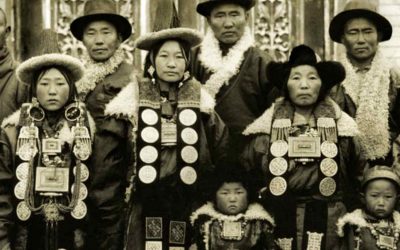
Hubo un matriarcado entre los Yugur?
Hubo un matriarcado entre los Yugur? Las costumbres matrimoniales de los Yugur presentan diferencias entre sus dos grupos principales. Entre los Yugur orientales las muchachas disponían de una época de gran libertad sexual. Su rito de paso era la ceremonia de hacerse...
Los Yugur de Gansu, descendientes de los Reyes de Dunhuang
Los Yugur de Gansu, descendientes de los Reyes de Dunhuang Denominación. Su nombre chino es Yugu, escrito 裕 固 族. Los Yugu o Yugur se llaman a sí mismos Yaoyuer y Xilayuguer. La denominación Yugur es relativamente reciente, pues solo empezó a utilizarse después del...

¿Quién es esa Diosa del Cielo que suelta flores?
¿Quién es esa Diosa del Cielo que suelta flores? Cuando llegamos a un país con una cultura tan distinta como la China es como si un manto de niebla nos cubriera los ojos, permitiéndonos solo una visión borrosa de todo lo que nos rodea. Luego vamos reconociendo los...
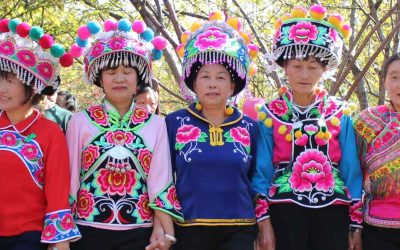
¿Por qué tienes que visitar un parque chino?
¿Por qué tienes que visitar un parque chino? Si muchos de los que viajan a China tienen la tendencia de visitar un mercado pensando que allí se concentra la esencia de la cultura del pueblo, esa visita debe de ser complementada con la de un parque, uno grande si es...
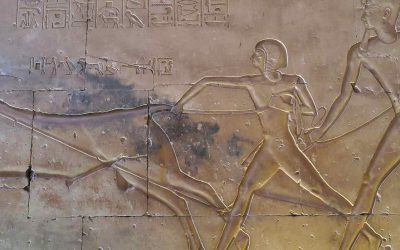
Bye Bye Darwin, el toro y el perro diseñaron las sociedades humanas
Bye Bye Darwin, el toro y el perro diseñaron las sociedades humanas Los toros salvajes, los llamados uros ya desaparecidos, eran el mamífero más grande que se podía encontrar en muchas de las regiones templadas del continente Euroasiático, uno de los más peligrosos,...
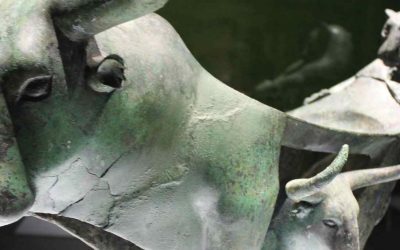
La cultura del toro dio forma a China
La cultura del toro dio forma a China El buey no es uno de los animales que se asocie habitualmente con la cultura china, sin embargo su importancia en la mitología, religión y vida ritual de este país es realmente importante. La cultura y la religión del toro están...