
The Dong are one of the minorities of China with a large population. According to the census of the year 2000 their population was 3,000,000 people.
They live mainly in Guizhou Province (approximately 1,800,000 people), along a fringe of flat lands that cross the province from north to south. There is also a big Dong population in the southern part of neighboring Hunan Province (about 900,000), and more than 200,000 persons in Guangxi Zhuang Autonomous Region, and a few thousand in Hubei Province (Enshi Prefecture).
The Dong, as do most of the peoples related to them, live near the rivers or in hills generally not of great height. They mainly cultivate rice. They raise domestic animals, especially hens and pigs. The exploitation of the forests, which holds a special spiritual relationship with the Dong, is an activity of economic importance.
They refer to themselves as «Kam.»
It is generally considered that there are two quite different types of Dong, the Dong of the North and the Dong of the South.
There are important linguistic and cultural differences between them. In general those of the north have received more influences from mainstream Chinese culture, while those of the south better conserve the Dong traditions. The typical monuments of the Dong, such as Drum Towers, Bridges of Rain and Wind, and the Temples of the Goddess Mother Sama, are all characteristic of the Dong of the South.
Their language belongs to the Sino-Tibetan family, Dong Dai branch, Zhuang Dong sub-branch. It has two main dialects, understandably called the northern and southern dialects, whose speakers cannot understand each other easily. Each one of these dialects has in turn three clearly differentiated local sub-dialects.
After 1958 an alphabet was invented for their language, but it has not been widely used. Before 1958, they used Chinese characters adapted to their own language.
More posts on China ethnic groups
La interpretación de los sueños en China
La interpretación de los sueños en China La semana pasada, en un libro sobre la minoría Hani en la remota región de Jinping uno de los autores dedicaba parte de su artículo sobre la adivinación a la interpretación de los sueños entre los Hani. Lo traduje, añadí...
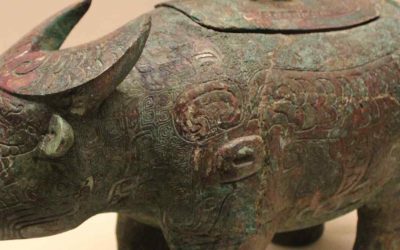
¿Quieres saber lo que significa soñar con una vaca en China? Te lo contamos aquí
¿Quieres saber lo que significa soñar con una vaca en China? Te lo contamos aquí. En los últimos días me he tropezado con varios documentos que trataban sobe los sueños en China, y algunos con ciertos fragmentos que explicaban en concreto el significado de soñar con...

La Interpretación de los Sueños entre los Hani
La Interpretación de los Sueños entre los Hani Por regla general la interpretación de los sueños en China ha seguido una línea simbólica, atribuyendo a los recuerdos de las experiencias vividas durante el sueño un valor relacionado, a veces no tan claramente en un...
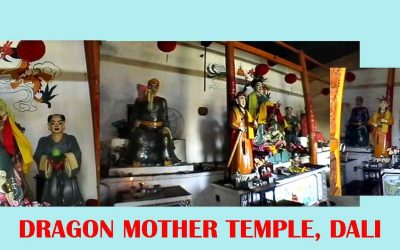
Templo a la Madre del Dragón de los Bai
Templo a la Madre del Dragón de los Bai Todos los que visitan la ciudad antigua de Dali van a ver las famosísimas Tres Pagodas, pues es uno de los monumentos más famosos de la ciudad y de todo Yunnan, pero muy pocos saben que justo en la aldea de al lado. A apenas 100...
Idiomas alternativos entre la minoría Jinuo
Idiomas alternativos entre la minoría Jinuo Al no tener un sistema de escritura, los Jinuo desarrollaron varios sistemas de signos que cubrían la comunicación en diferentes situaciones: desde las puertas de madera en los senderos de montaña que advierten del peligro a...
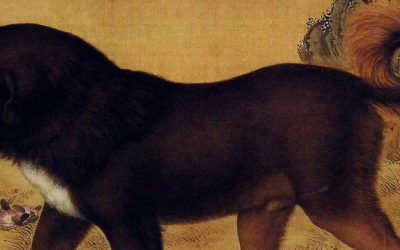
El extraño perro negro – Relato del Soushenji
El extraño perro negro Relato del Shoushenji Zang Zhongying, natural de Fufeng era un servidor de la corte imperial. El sirviente de su casa hizo arroz y lo puso en una bandeja de madera, pero cayó polvo impuro y lo estropeó. El arroz estaba a punto de ser cocido,...