
The Dong are one of the minorities of China with a large population. According to the census of the year 2000 their population was 3,000,000 people.
They live mainly in Guizhou Province (approximately 1,800,000 people), along a fringe of flat lands that cross the province from north to south. There is also a big Dong population in the southern part of neighboring Hunan Province (about 900,000), and more than 200,000 persons in Guangxi Zhuang Autonomous Region, and a few thousand in Hubei Province (Enshi Prefecture).
The Dong, as do most of the peoples related to them, live near the rivers or in hills generally not of great height. They mainly cultivate rice. They raise domestic animals, especially hens and pigs. The exploitation of the forests, which holds a special spiritual relationship with the Dong, is an activity of economic importance.
They refer to themselves as «Kam.»
It is generally considered that there are two quite different types of Dong, the Dong of the North and the Dong of the South.
There are important linguistic and cultural differences between them. In general those of the north have received more influences from mainstream Chinese culture, while those of the south better conserve the Dong traditions. The typical monuments of the Dong, such as Drum Towers, Bridges of Rain and Wind, and the Temples of the Goddess Mother Sama, are all characteristic of the Dong of the South.
Their language belongs to the Sino-Tibetan family, Dong Dai branch, Zhuang Dong sub-branch. It has two main dialects, understandably called the northern and southern dialects, whose speakers cannot understand each other easily. Each one of these dialects has in turn three clearly differentiated local sub-dialects.
After 1958 an alphabet was invented for their language, but it has not been widely used. Before 1958, they used Chinese characters adapted to their own language.
More posts on China ethnic groups
La importancia de los tonos
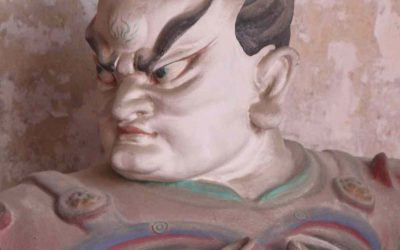
La importancia de los tonos Un fragmento del libro de Mario Satz Tal Orot- Dichos, sueños y pensamientos de Lo Iadúa, el Rabí desconocido. Un enfoque multicultural a algunos de los aspectos más interesantes de la interiorización. 164- “¿Has oído hablar de Shou Lao?”,...

El carácter 拆 chai – desmantelar
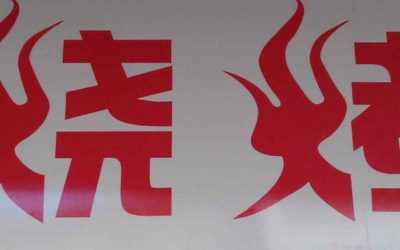
El carácter 拆 chai - desmantelar Uno de los caracteres más frecuentes en la escenografía urbana de la china del desarrollo y la transformación es chai 拆- desmantelar. Cualquier paseo por los barrios antiguos de la mayoría de las ciudades chinas llevaba continuamente...

El Melocotón, fruto de la inmortalidad
El Melocotón, fruto de la inmortalidad En mi "Manual de Escritura de los Caracteres Chinos" (1) sostengo una opinión contraria a la de la mayoría de los estudiosos de los caracteres chinos, y es que, la formación de los caracteres llamados picto-fonéticos, responde no...

Descubriendo al tigre y al chamán en los caracteres chinos
Descubriendo al tigre y al chamán en los caracteres chinos En chino piel se dice pifu (皮肤) En el carácter pi 皮, que significa piel, aún se puede descubrir una mano que desolla una piel. El carácter fu 肤, sin embargo, es un carácter simplificado, que nos muestra el...

El carácter chino para escribir serpiente
El carácter para "serpiente" El carácter chino para representar a la serpiente ha sufrido a lo largo de los siglos una curiosa evolución que, aunque visto desde la perspectiva cultural del siglo XXI, puede resultar extraño, no lo será tanto si recordamos la simbología...
La adivinación por los caracteres chinos
La adivinación por los caracteres chinos Las prácticas adivinatorias han tenido una importancia tremenda a lo largo de la historia china. De hecho sería imposible entender la historia y la cultura china sin constantes referencias a esas prácticas adivinatorias. Desde...