

Viajes a Yunnan, Tibet y oeste de China
Chinese character 次 second, times
- second
- times, order
- inferior
- remain
- stand.
HSK – 2
STROKES – 6
RADICAL – 冫
Elements —- two 二 + open mouth 欠. Phonetic series 次.
This is two 二 breaths (or two sneezes) with an open mouth 欠, emphasizing the second one. Second > secondary > times > order > arrange > arrange hair (of woman). It is also the modern form of an OBC that showed a military encampment > place > remain > stand.
其次 qícì – next; second.
次序 cìxù – order, sequence (order + order)
Two breaths to mean second, for the second breath. First and second give the idea of counting > order. It also give the meaning of times, once, twice….
From second we have also the idea of something of second category, then inferior. Something of inferior category remains in a place, nobody want to take it. From remain > stand (a person who remains). Stand is rarely used but important to understand other characters of this family.
More posts on Chinese characters
Caratteri cinesi 肉 ròu – carne
Caratteri cinesi 肉 ròu – carne carne HSK -2 tratti - 6 RADICALe - 肉 Questo è il pittogramma di un pezzo di carne con vene e nervi. Quando forma altri caratteri, viene semplificato in月: Un corpo con le costole delineate牛肉 niúròu – manzo (bue + carne) 猪肉 zhūròu –...
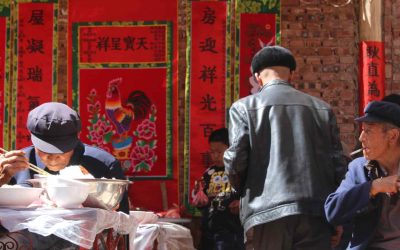
Principales fiestas de la minoría Bai
Feria de Marzo: Se celebra del 15 al 20 de marzo lunar. Es la fiesta más importante de los Bai. Su origen se remonta al Reino de Nanzhao, cuando según la leyenda la diosa Guanyin acabó con un demonio que se comía los ojos de la gente. Se celebra en el Monte Diancang,...
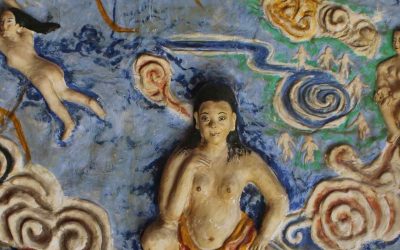
Literatura y proverbios de la minoría Bai
Los Bai tienen una cultura muy elaborada con importantes obras de astronomía y medicina. Según su mito principal: "El origen del hombre y de todas las cosas". En un principio el mundo era un caos oscuro, con un mar enorme entre cielo y tierra cuya agua está en...
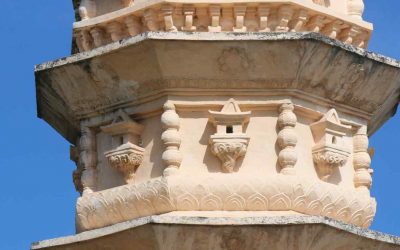
Historia de la minoría Bai
Se sabe poco del origen de los Bai. Hay un buen número de teorías diferentes. Unos dicen que están relacionados con los Yi, y se originaron por tanto mucho más al norte de su posición actual. Otros les consideran aborígenes de la región del Lago Erhai. De lo que no...
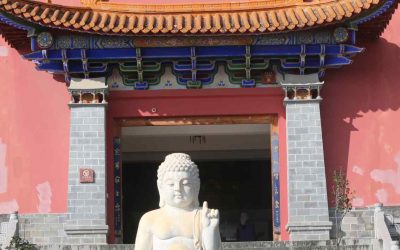
Religión de los Bai
La mayoría de los Bai practican el Budismo desde el siglo VII. De hecho, Guanyin, la diosa budista de la misericordia, juega un papel importante en los mitos más antiguos de los Bai. Además, la influencia china se manifiesta por la importancia que tienen entre ellos...
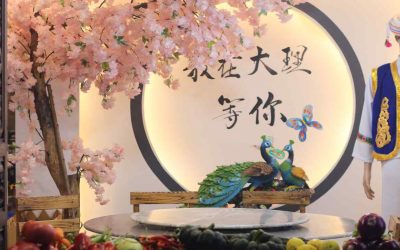
Presentando a los Bai
Los Bai son una de las minorías que más largo contacto ha tenido con los chinos. Es también una de las ha recibido más influencias culturales. Esto ha sido debido, en parte, a la accesibilidad de las tierras que habitan, a su condición de agricultores, y por tanto con...