
chinese character欠 qiàn – lack, owe
① lack, owe
② short of, lacking.
③ lean forwad
HSK –
STROKES – 4
RADICAL – 欠
Elements —- Pictogram of a person with the mouth open. Phonetic series 欠.
The upper part evolved from the pictogram of an open mouth. A person人with an open mouth is yawning, or trying to compensate for the lack of air.
欠缺 qiànquē – lack/ be deficient of (lack + lack)
哈欠 hāqiàn – yawn (exhale + yawn)
欠债 qiànzhài – owe a debt (owe + debt)
Though in its origin this character, even being related to a person, has a not so clear relation with the character for person 人, now, the evolution of language made it similar. In the upper part of the person a «cubist» representation of an open mouth has been added.
This is a person yawning, or perhaps a person with the mouth open who feels a lack of air. Later it was used for other situations in which there is a lack of something, as to lack something, to be defient in something, to owe money, etc.
More posts on Chinese characters
Caractère chinois 认 rèn – connaître
More posts on Chinese characters
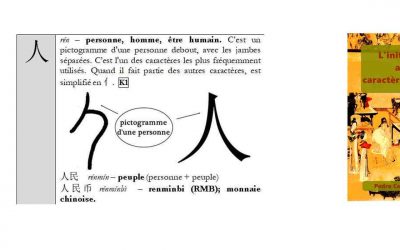
Caractère chinois 人 rén – personne
More posts on Chinese characters

Familia de caracteres 欠 bostezar, boca abierta.
欠 qiàn – bostezar; deber; faltar, carecer. La parte superior evolucionó desde el pictograma de una boca abierta. Una persona 人 con la boca abierta está bostezando o trata de combatir la falta de aire. 欠缺 qiànquē – falta, deficiencia (faltar + faltar) 欠债 ...

Caracter chino 欠 qiàn – bostezar
Caracter chino 欠 qiàn – bostezar 1. bostezar 2. deber 3. faltar 4. carecer. HSK - 6 TRAZOS - 4 RADICAL - 欠 Elementos ---- Pictograma de una persona con la boca abierta. Serie fonética 欠. La parte superior evolucionó desde el pictograma de una boca abierta. Una...
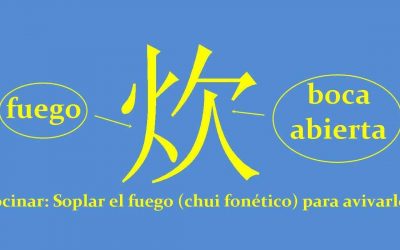
Caracter chino 炊 chuī – cocinar
Caracter chino 炊 chuī – cocinar 1. cocinar 2. cocer. HSK - TRAZOS - 8 RADICAL - 火Elementos ---- Boca abierta 欠 + fuego 火. Serie fonética 欠. Soplar 吹 (chuī fonético) al fuego 火 para avivarlo y empezar a cocinar.炊具 chuījù - utensilios de cocina. More posts on...

Childbirth in Naxi culture
The rituals performed at birth suggest that in the Naxi traditional thought the entering of the Sv life god in a person is a gradual process developed during the last term of pregnancy and the first days of life, and that this process is considered complete in a first...