
Chinese character 次 second, times
- second
- times, order
- inferior
- remain
- stand.
HSK – 2
STROKES – 6
RADICAL – 冫
Elements —- two 二 + open mouth 欠. Phonetic series 次.
This is two 二 breaths (or two sneezes) with an open mouth 欠, emphasizing the second one. Second > secondary > times > order > arrange > arrange hair (of woman). It is also the modern form of an OBC that showed a military encampment > place > remain > stand.
其次 qícì – next; second.
次序 cìxù – order, sequence (order + order)
Two breaths to mean second, for the second breath. First and second give the idea of counting > order. It also give the meaning of times, once, twice….
From second we have also the idea of something of second category, then inferior. Something of inferior category remains in a place, nobody want to take it. From remain > stand (a person who remains). Stand is rarely used but important to understand other characters of this family.
More posts on Chinese characters
Caractère chinois 肉 ròu – chair
More posts on Chinese characters
Caractère chinois 认 rèn – connaître
More posts on Chinese characters
Caractère chinois 人 rén – personne
More posts on Chinese characters

Familia de caracteres 欠 bostezar, boca abierta.
欠 qiàn – bostezar; deber; faltar, carecer. La parte superior evolucionó desde el pictograma de una boca abierta. Una persona 人 con la boca abierta está bostezando o trata de combatir la falta de aire. 欠缺 qiànquē – falta, deficiencia (faltar + faltar) 欠债 ...

Caracter chino 欠 qiàn – bostezar
Caracter chino 欠 qiàn – bostezar 1. bostezar 2. deber 3. faltar 4. carecer. HSK - 6 TRAZOS - 4 RADICAL - 欠 Elementos ---- Pictograma de una persona con la boca abierta. Serie fonética 欠. La parte superior evolucionó desde el pictograma de una boca abierta. Una...
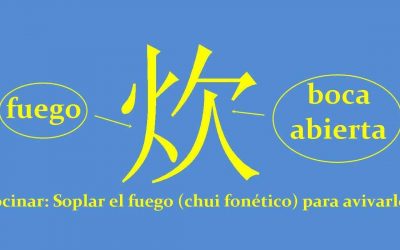
Caracter chino 炊 chuī – cocinar
Caracter chino 炊 chuī – cocinar 1. cocinar 2. cocer. HSK - TRAZOS - 8 RADICAL - 火Elementos ---- Boca abierta 欠 + fuego 火. Serie fonética 欠. Soplar 吹 (chuī fonético) al fuego 火 para avivarlo y empezar a cocinar.炊具 chuījù - utensilios de cocina. More posts on...