
Caracter chino 欠 qiàn – bostezar
- 1. bostezar
- 2. deber
- 3. faltar
- 4. carecer.
HSK – 6
TRAZOS – 4
RADICAL – 欠
Elementos —- Pictograma de una persona con la boca abierta.
Serie fonética 欠.
La parte superior evolucionó desde el pictograma de una boca abierta. Una persona 人 con la boca abierta está bostezando o trata de combatir la falta de aire. Falta de aire > faltar, carecer > deber.
欠缺 qiànquē – falta, deficiencia (faltar + faltar)
欠债 qiànzhài – deber (deber + deuda)
More posts on Chinese characters
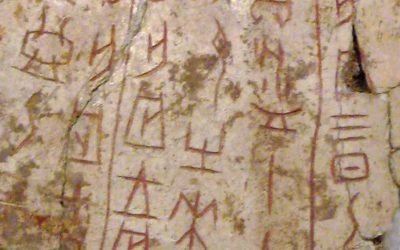
El origen de los caracteres chinos
Interesante teoría sobre el origen de los caracteres chinos en el libro John C. Didier, “In and Outside the Square,” Sino-Platonic Papers, 192, vol. 1 (September, 2009). Pag.71. La tecnología de la escritura aparece súbita y morfológicamente plenamente desarrollada en...
The origin of Chinese characters
The origin of Chinese characters in John C. Didier, “In and Outside the Square,” Sino-Platonic Papers, 192, vol. 1 (September, 2009) The technology of writing appears suddenly and morphologically fully developed on Shang oracle bones and, later, bronzes at about the...
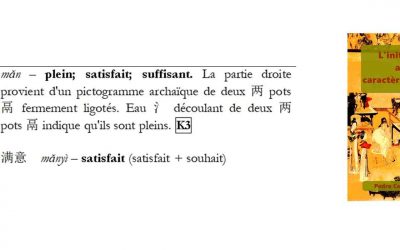
Caractère chinois 满 mǎn – plein
More posts on Chinese characters

Caractère chinois 辆 lliàng – quantificateur
More posts on Chinese characters
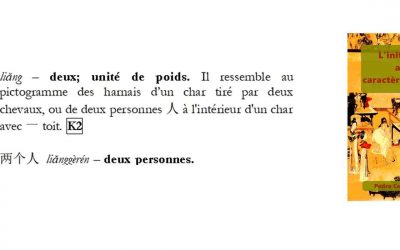
Caractère chinois 两 liǎng – deux
More posts on Chinese characters
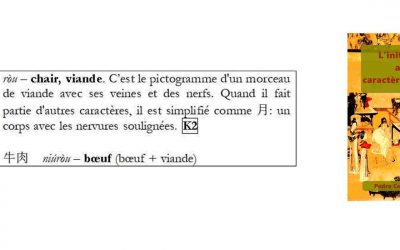
Caractère chinois 肉 ròu – chair
More posts on Chinese characters